


- Retrait en 2 heures
- Assortiment impressionnant
- Paiement sécurisé
- Toujours un magasin près de chez vous
- Retrait gratuit dans votre magasin Club
- 7.000.0000 titres dans notre catalogue
- Payer en toute sécurité
- Toujours un magasin près de chez vous



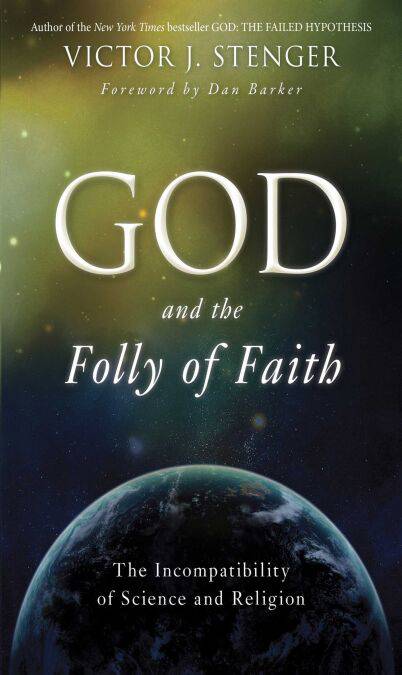
God and the Folly of Faith EBOOK
The Incompatibility of Science and Religion
Victor J. Stenger
Ebook | Anglais
19,00 €
+ 19 points
Format
Description
A thorough and hard-hitting critique that is a must read for anyone interested in the interaction between religion and science. It has become the prevalent view among sociologists, historians, and some theistic scientists that religion and science have never been in serious conflict. Some even claim that Christianity was responsible for the development of science. In a sweeping historical survey that begins with ancient Greek science and proceeds through the Renaissance and Enlightenment to contemporary advances in physics and cosmology, Stenger makes a convincing case that not only is this conclusion false, but Christianity actually held back the progress of science for one thousand years. It is significant, he notes, that the scientific revolution of the seventeenth century occurred only after the revolts against established ecclesiastic authorities in the Renaissance and Reformation opened up new avenues of thought. The author goes on to detail how religion and science are fundamentally incompatible in several areas: the origin of the universe and its physical parameters, the origin of complexity, holism versus reductionism, the nature of mind and consciousness, and the source of morality. In the end, Stenger is most troubled by the negative influence that organized religion often exerts on politics and society. He points out antiscientific attitudes embedded in popular religion that are being used to suppress scientific results on issues of global importance, such as overpopulation and environmental degradation. When religion fosters disrespect for science, it threatens the generations of humanity that will follow ours.
Spécifications
Parties prenantes
- Auteur(s) :
- Editeur:
Contenu
- Nombre de pages :
- 408
- Langue:
- Anglais
Caractéristiques
- EAN:
- 9781616146009
- Date de parution :
- 02-04-12
- Format:
- Ebook
- Protection digitale:
- Adobe DRM
- Format numérique:
- ePub


Seulement chez Librairie Club
+ 19 points sur votre carte client de Librairie Club
INSPIRATION


Les avis
Nous publions uniquement les avis qui respectent les conditions requises. Consultez nos conditions pour les avis.