


- Retrait en 2 heures
- Assortiment impressionnant
- Paiement sécurisé
- Toujours un magasin près de chez vous
- Retrait en 2 heures
- Assortiment impressionnant
- Paiement sécurisé
- Toujours un magasin près de chez vous



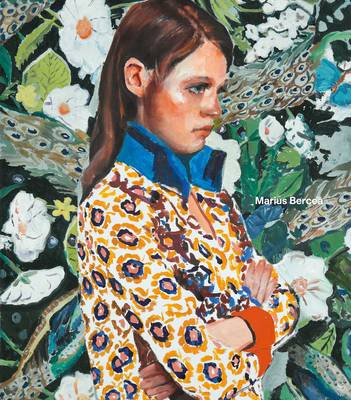
Marius Bercea - Five Years of Painting
Marius Bercea, Thomas Marks, Diana Marincu, Liviana Dan, Nick Goss
Livre relié | Anglais
76,45 €
+ 152 points
Description
This significant new monograph on Romanian painter Marius Bercea (b. 1979) presents a selection of his work from 2020 to 2025, offering an in-depth view of his recent practice through both critical and personal perspectives. The publication features a new essay by curator and critic Diana Marincu, a conversation with the British painter Nick Goss, chaired by Thomas Marks, an interview with art historian and curator Liviana Dan, and a foreword by Matt Price. The book is published by Anomie Publishing, London, in association with Jecza Gallery and Jecza Foundation, with support from UniCredit Bank Romania.
Bercea is widely recognized as a leading figure of the Cluj School of Painting--a group of artists who emerged in Cluj-Napoca following the 1989 Romanian Revolution. Drawing on his experiences growing up in Communist Romania and his encounters with American culture, particularly during his many visits to Los Angeles, Bercea creates paintings that navigate the intersections of personal and collective memory, history and cultural identity. In recent years, Bercea has focused his portraiture on a generation of young Romanians, specifically those born around 1989, exploring their unique sense of historical memory and their collaged experience of liberal democracy and the free market.
In her essay, Diana Marincu examines recurring figures and motifs in Bercea's recent work. She considers how his painted spaces often function like the scene of a film or the stage of a live performance, populated by characters who seem to await the finished script. Marincu traces the interplay of nostalgia, temporality, and imagination in Bercea's compositions, considering how his paintings negotiate the tension between personal experience and collective history.
In a conversation with friend and fellow artist Nick Goss, chaired by Thomas Marks, Bercea discusses his studio practice, techniques, and the literary and art-historical references that inform his work. They consider Bercea's engagement with American modernism, the interplay of interior and exterior spaces and the careful attention paid to the details of his subjects and environments. The dialogue emphasises how memory, storytelling, and cinematic imagination converge in Bercea's paintings. They also discuss their respective art educations and upbringings and how they inform their practices and the overlap between personal and cultural memory. Bercea's interview with Liviana Dan foregrounds the artist's intellectual and emotional engagement with painting and its history, tracing the influence of masters from Poussin and Titian to Cézanne and Gerhard Richter. They discuss his approach to portraiture, domestic interiors, color, and geometry, as well as the ways in which his biography and personal life intersect with his artmaking.
Bercea is widely recognized as a leading figure of the Cluj School of Painting--a group of artists who emerged in Cluj-Napoca following the 1989 Romanian Revolution. Drawing on his experiences growing up in Communist Romania and his encounters with American culture, particularly during his many visits to Los Angeles, Bercea creates paintings that navigate the intersections of personal and collective memory, history and cultural identity. In recent years, Bercea has focused his portraiture on a generation of young Romanians, specifically those born around 1989, exploring their unique sense of historical memory and their collaged experience of liberal democracy and the free market.
In her essay, Diana Marincu examines recurring figures and motifs in Bercea's recent work. She considers how his painted spaces often function like the scene of a film or the stage of a live performance, populated by characters who seem to await the finished script. Marincu traces the interplay of nostalgia, temporality, and imagination in Bercea's compositions, considering how his paintings negotiate the tension between personal experience and collective history.
In a conversation with friend and fellow artist Nick Goss, chaired by Thomas Marks, Bercea discusses his studio practice, techniques, and the literary and art-historical references that inform his work. They consider Bercea's engagement with American modernism, the interplay of interior and exterior spaces and the careful attention paid to the details of his subjects and environments. The dialogue emphasises how memory, storytelling, and cinematic imagination converge in Bercea's paintings. They also discuss their respective art educations and upbringings and how they inform their practices and the overlap between personal and cultural memory. Bercea's interview with Liviana Dan foregrounds the artist's intellectual and emotional engagement with painting and its history, tracing the influence of masters from Poussin and Titian to Cézanne and Gerhard Richter. They discuss his approach to portraiture, domestic interiors, color, and geometry, as well as the ways in which his biography and personal life intersect with his artmaking.
Spécifications
Parties prenantes
- Auteur(s) :
- Editeur:
Contenu
- Nombre de pages :
- 176
- Langue:
- Anglais
Caractéristiques
- EAN:
- 9781910221761
- Date de parution :
- 09-07-26
- Format:
- Livre relié
- Format numérique:
- Genaaid
- Dimensions :
- 248 mm x 279 mm


Seulement chez Librairie Club
+ 152 points sur votre carte client de Librairie Club
Cadeau


Les avis
Nous publions uniquement les avis qui respectent les conditions requises. Consultez nos conditions pour les avis.