


- Retrait en 2 heures
- Assortiment impressionnant
- Paiement sécurisé
- Toujours un magasin près de chez vous
- Retrait en 2 heures
- Assortiment impressionnant
- Paiement sécurisé
- Toujours un magasin près de chez vous



39,45 €
+ 78 points
Description
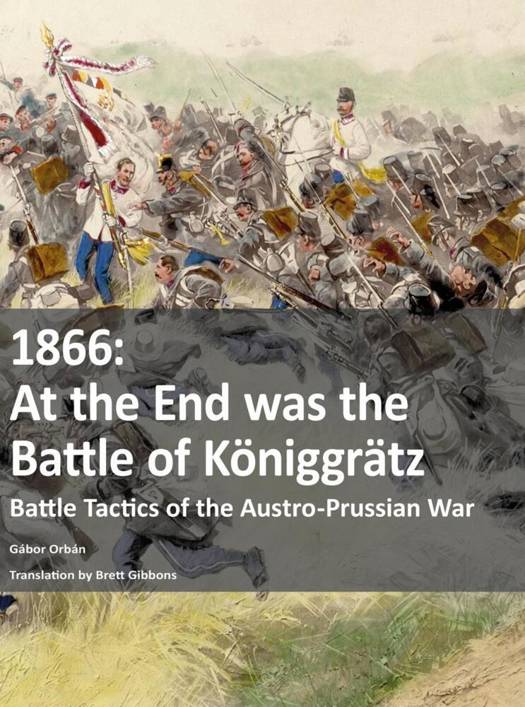
The scholarly inquiry of the 'causes' of Austria's defeat in 1866 is almost as old as the war against rising Prussia itself. Already in the immediate aftermath of the conflict, considerable energy was devoted to identifying the sources of failure. At the time, responsibility was attributed to the misjudgements of the high command, and above all to the commander-in-chief of the k.k. North Army, Feldzeugmeister Ludwig von Benedek. This one-sided interpretation, together with the broader debate surrounding the so-called 'question of guilt' (Schuldfrage), was later treated with increasing nuance. During the twentieth century, historians sought the origins of the defeat at both political and military levels. From a military perspective, research has primarily examined developments in armaments technology, the (strategic-) operational miscalculations of the campaign, and the structural deficiencies of the k.k. Army, which stemmed in large part from severe budgetary restrictions. By contrast, comparatively little attention has been devoted to battle tactics. In 1866, Austria entered the war against Prussia with a tactical doctrine nearly sixty years old, based on an overestimation of the historical tradition of military values.This volume examines precisely this neglected aspect. Within the broader context of armed conflicts since the Revolutionary and Napoleonic Wars against France, it introduces and systematically analyses Austrian military doctrine, with particular emphasis on tactics. The study critically examines the outdated systems of recruitment and training, while also considering the related fields of uniforms and equipment, soldiers' daily life, and military communication. The investigation, however, focuses primarily on two main themes: first, the Austrians' disdain for the employment of firearms; and second, their unshakeable belief in the invincibility of their own close-order battle formations. The bayonet charge, in particular, was accorded a special and almost emblematic status. The volume further explores the interaction between the various arms in wartime and highlights the complex interrelationship between strategic and tactical concepts. It becomes clear that the k.k.. Austrian Army was among the very last of the truly 'Napoleonic' forces; an army whose admirable courage could no longer compensate for hopelessly outdated infantry tactics in the age of industrialised warfare.
Spécifications
Parties prenantes
- Auteur(s) :
- Editeur:
Contenu
- Nombre de pages :
- 224
- Langue:
- Anglais
Caractéristiques
- EAN:
- 9783963600746
- Date de parution :
- 24-04-26
- Format:
- Livre broché
- Dimensions :
- 200 mm x 10 mm
- Poids :
- 1059 g


Seulement chez Librairie Club
+ 78 points sur votre carte client de Librairie Club
Cadeau


Les avis
Nous publions uniquement les avis qui respectent les conditions requises. Consultez nos conditions pour les avis.