


- Retrait en 2 heures
- Assortiment impressionnant
- Paiement sécurisé
- Toujours un magasin près de chez vous
- Retrait gratuit dans votre magasin Club
- 7.000.0000 titres dans notre catalogue
- Payer en toute sécurité
- Toujours un magasin près de chez vous



241,45 €
+ 482 points
Description
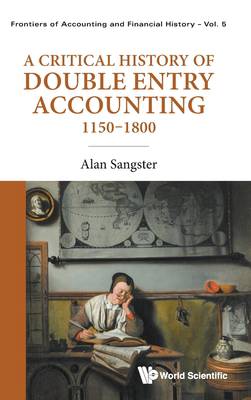
The English language accounting history of double entry accounting before 1800 has reached an impasse. The doors to its reawakening are fiercely guarded by combination locks powered by confirmation bias and adherence to a priori wisdom requiring vast amounts of supportive scholarship to make public the smallest contribution to what is known and understood of the first 600 years of its use. To open those doors, a foundation is needed upon which scholarship can begin anew -- a framework of reference that can be used to justify the validity and relevance of scholarship and discovery in this field. That is the purpose and role of this book.It does not focus on the technical. It focuses on the environment and context of use of the method, and its function. It considers 'why' and consequences. It asks who, when, where, and what, along with 'how'. It adopts the perspective that the reason for the bookkeeping drove how it was adopted, not the availability of parchment or paper, nor the emergence of the concept of the technology -- the book -- in which it was recorded. Rather its use was driven by a need of the person who wrote the record, or by the needs of those who wished a record to be kept.A critical traditional historical method is adopted. Explanations are sought and identified utilising knowledge of the environment and context of practice that, to this point, rarely if ever feature in the antiquarian historiography this book ideally seeks to replace. The approach adopted is multi-disciplinary and the sources used are multi-disciplinary and multi-lingual. This book is essential reading for anyone with an interest in accounting's past.
Spécifications
Parties prenantes
- Auteur(s) :
- Editeur:
Contenu
- Nombre de pages :
- 440
- Langue:
- Anglais
Caractéristiques
- EAN:
- 9789819815807
- Date de parution :
- 11-12-25
- Format:
- Livre relié
- Format numérique:
- Genaaid
- Dimensions :
- 152 mm x 229 mm
- Poids :
- 757 g


Seulement chez Librairie Club
+ 482 points sur votre carte client de Librairie Club

Les avis
Nous publions uniquement les avis qui respectent les conditions requises. Consultez nos conditions pour les avis.