


- Retrait en 2 heures
- Assortiment impressionnant
- Paiement sécurisé
- Toujours un magasin près de chez vous
- Retrait en 2 heures
- Assortiment impressionnant
- Paiement sécurisé
- Toujours un magasin près de chez vous



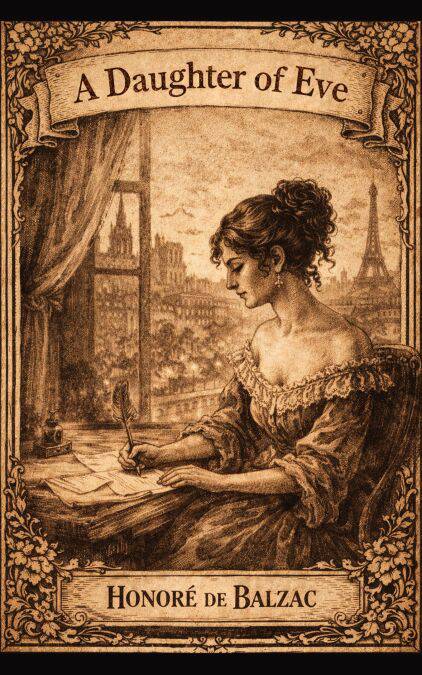
Description
In A Daughter of Eve, Honoré de Balzac delivers a compelling exploration of love, marriage, ambition, and disillusionment set against the glittering yet treacherous backdrop of 19th-century Parisian society. As part of his monumental collection La Comédie Humaine, this novel dives deeply into the emotional and moral struggles of women navigating the rigid expectations of aristocratic life.
The story centers on two sisters, Marie-Angélique and Marie-Eugénie de Granville, daughters of a devoted and idealistic mother who has raised them with strict moral principles and romantic ideals. Both sisters are married into respectable positions—one to a rising politician, the other to a nobleman—but beneath the polished surface of their lives lies a quiet dissatisfaction. Their sheltered upbringing leaves them ill-prepared for the complexities of marriage, social ambition, and emotional temptation.
Marie-Angélique, the more passionate and impulsive of the two, becomes the emotional heart of the novel. Though married to Félix de Vandenesse, a man deeply immersed in political ambition, she feels neglected and yearns for romance and admiration. When she encounters Raoul Nathan, a charismatic and manipulative writer burdened with debts and grand illusions, she is swept into an emotional entanglement that threatens not only her marriage but her social standing. Through this relationship, Balzac masterfully reveals the dangers of vanity, naivety, and unchecked desire.
Meanwhile, Marie-Eugénie represents a contrasting temperament—calmer and more practical—yet she too must confront the realities of aristocratic life. Together, the sisters embody Balzac's exploration of the "daughter of Eve": women portrayed as vulnerable to temptation, yet capable of growth, sacrifice, and moral reckoning.
Balzac paints a vivid portrait of Restoration-era France, where politics, literature, and high society intersect in a world driven by reputation, influence, and financial survival. The novel scrutinizes the fragile balance between love and duty, highlighting how easily emotional longing can collide with social expectation. With psychological depth and sharp social commentary, Balzac exposes both the fragility of romantic illusions and the resilience of women forced to confront the consequences of their choices.
Rich in character development and moral complexity, A Daughter of Eve is not merely a story of infidelity or temptation—it is a study of human weakness, ambition, and redemption. Balzac invites readers to question whether innocence is a strength or a liability in a world governed by power and appearance.
For readers who appreciate classic French literature, intricate character studies, and timeless reflections on love and society, A Daughter of Eve remains a powerful and thought-provoking work that continues to resonate across generations.
The story centers on two sisters, Marie-Angélique and Marie-Eugénie de Granville, daughters of a devoted and idealistic mother who has raised them with strict moral principles and romantic ideals. Both sisters are married into respectable positions—one to a rising politician, the other to a nobleman—but beneath the polished surface of their lives lies a quiet dissatisfaction. Their sheltered upbringing leaves them ill-prepared for the complexities of marriage, social ambition, and emotional temptation.
Marie-Angélique, the more passionate and impulsive of the two, becomes the emotional heart of the novel. Though married to Félix de Vandenesse, a man deeply immersed in political ambition, she feels neglected and yearns for romance and admiration. When she encounters Raoul Nathan, a charismatic and manipulative writer burdened with debts and grand illusions, she is swept into an emotional entanglement that threatens not only her marriage but her social standing. Through this relationship, Balzac masterfully reveals the dangers of vanity, naivety, and unchecked desire.
Meanwhile, Marie-Eugénie represents a contrasting temperament—calmer and more practical—yet she too must confront the realities of aristocratic life. Together, the sisters embody Balzac's exploration of the "daughter of Eve": women portrayed as vulnerable to temptation, yet capable of growth, sacrifice, and moral reckoning.
Balzac paints a vivid portrait of Restoration-era France, where politics, literature, and high society intersect in a world driven by reputation, influence, and financial survival. The novel scrutinizes the fragile balance between love and duty, highlighting how easily emotional longing can collide with social expectation. With psychological depth and sharp social commentary, Balzac exposes both the fragility of romantic illusions and the resilience of women forced to confront the consequences of their choices.
Rich in character development and moral complexity, A Daughter of Eve is not merely a story of infidelity or temptation—it is a study of human weakness, ambition, and redemption. Balzac invites readers to question whether innocence is a strength or a liability in a world governed by power and appearance.
For readers who appreciate classic French literature, intricate character studies, and timeless reflections on love and society, A Daughter of Eve remains a powerful and thought-provoking work that continues to resonate across generations.
Spécifications
Parties prenantes
- Auteur(s) :
- Editeur:
Contenu
- Nombre de pages :
- 147
- Langue:
- Anglais
Caractéristiques
- EAN:
- 9786146023417
- Date de parution :
- 17-02-26
- Format:
- Ebook
- Protection digitale:
- Digital watermarking
- Format numérique:
- ePub


Seulement chez Librairie Club
Cadeau


Les avis
Nous publions uniquement les avis qui respectent les conditions requises. Consultez nos conditions pour les avis.