


En raison d'une grève chez bpost, des retards de livraison peuvent survenir. Besoin de quelque chose en urgence ? Optez pour un retrait en magasin ou rendez-vous dans une Librairie Club à proximité.
- Retrait en 2 heures
- Assortiment impressionnant
- Paiement sécurisé
- Toujours un magasin près de chez vous
En raison d'une grève chez bpost, des retards de livraison peuvent survenir. Besoin de quelque chose en urgence ? Optez pour un retrait en magasin ou rendez-vous dans une Librairie Club à proximité.
- Retrait en 2 heures
- Assortiment impressionnant
- Paiement sécurisé
- Toujours un magasin près de chez vous



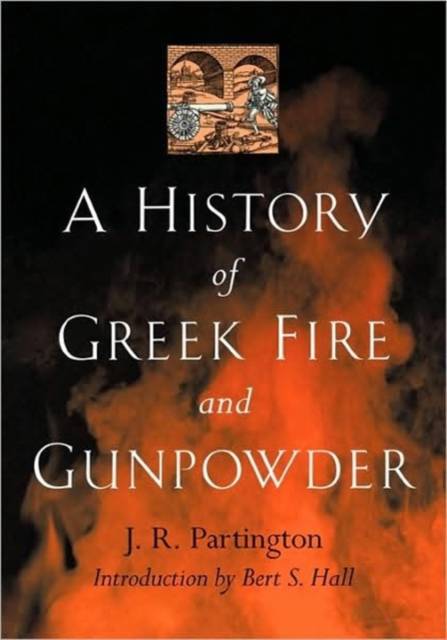
A History of Greek Fire and Gunpowder
James Riddick Partington, J R Partington
Livre broché | Anglais
28,59 €
+ 57 points
Description
For nearly 600 years, from the battles of the early fourteenth century to the dropping of the atomic bomb at Hiroshima, firearms derived from gunpowder and other chemicals defined the frightful extent of war. The apparatus and materials used in World War I would have been familiar to our remote ancestors. In this classic work, first published in 1960, James Riddick Partington provides a worldwide survey of the evolution of incendiary devices, Greek fire, and gunpowder. Greek fire, a composition Partington believes was made of a distilled petroleum fraction and other ingredients (but not saltpetre), was most famously used in the sieges of Constantinople and the Crusades. Partington moves from its antecedents--other incendiaries used in ancient warfare--to European gunpowder recipe books (The Latin Book of Fire, Bellifortis, and Feuerwerkbuch) and the history of infernal machines, mines, canon, small arms, and artillery. His book includes chapters on gunpowder and weapons in Muslim lands, India, and China--including fire books, the use of gunpowder as a propellant, the artillery of the Mughal Emperors, and the use of saltpetre in explosives. He traces the development of gunpowder to eleventh-century China and cites the first known mention and picture of a firearm in 1326. "The history of gunpowder and firearms has attracted many authors with varying interests. The general historian must take account of major inventions effecting revolutions in the life of nations. The historian of science is concerned mostly with the invention of gunpowder. The historian of technology examines the development in the manufacture of explosives and weapons, and the way in which gunpowder has found applications in the peaceful arts. The military historian deals mainly with the use of gunpowder as an explosive and a propellant . . . and the development of firearms and their use in warfare. No recent book in English (or for that matter in any language) has attempted a concise survey of the subject."--from the Preface
Spécifications
Parties prenantes
- Auteur(s) :
- Editeur:
Contenu
- Nombre de pages :
- 416
- Langue:
- Anglais
Caractéristiques
- EAN:
- 9780801859540
- Date de parution :
- 01-10-98
- Format:
- Livre broché
- Format numérique:
- Trade paperback (VS)
- Dimensions :
- 178 mm x 246 mm
- Poids :
- 730 g



Seulement chez Librairie Club
+ 57 points sur votre carte client de Librairie Club
Cadeau


Les avis
Nous publions uniquement les avis qui respectent les conditions requises. Consultez nos conditions pour les avis.