


En raison d'une grève chez bpost, des retards de livraison peuvent survenir. Besoin de quelque chose en urgence ? Optez pour un retrait en magasin ou rendez-vous dans une Librairie Club à proximité.
- Retrait en 2 heures
- Assortiment impressionnant
- Paiement sécurisé
- Toujours un magasin près de chez vous
En raison d'une grève chez bpost, des retards de livraison peuvent survenir. Besoin de quelque chose en urgence ? Optez pour un retrait en magasin ou rendez-vous dans une Librairie Club à proximité.
- Retrait en 2 heures
- Assortiment impressionnant
- Paiement sécurisé
- Toujours un magasin près de chez vous



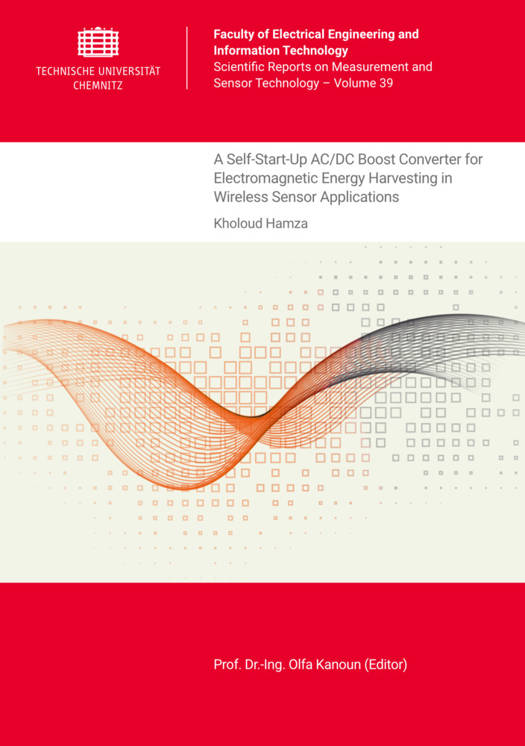
A Self-Start-Up AC/DC Boost Converter for Electromagnetic Energy Harvesting in Wireless Sensor Applications
Kholoud Hamza
22,95 €
+ 45 points
Description
Electromagnetic energy harvesting-powered wireless sensors must operate with ultra-low power, remain functional under low vibrations, and autonomously restart after long energy interruptions. However, most systems are inefficient, need dedicated start-up and complex gate drivers, often need up to 5 V supply, and rarely report restart time after unpowered phases. This thesis proposes two self-powered AC/DC boost converters that start from zero voltage under ultra-low excitation without dedicated start-up circuits. A passive multi-stage voltage multiplier (VM) is integrated in the rectification stage to fast reach the 1.6 V threshold, while the harvester inductance is used as the boost element. The converters operate in start-up and boost modes using two validated topologies: bidirectional and parallel. Both use a three-stage VM; the bidirectional blocks reverse conduction, while the parallel reduces conduction losses. Boost-mode experiments show efficiency and charging speed strongly depend on switching frequency and duty cycle, with optimal performance at 32 kHz. At 0.22g and 29Hz with a 47mF supercapacitor, the bidirectional converter performs best at 78% duty cycle and the parallel at 68.4%. Both start autonomously from 0.65V and reach 1.6V within 20s. In boost mode, the bidirectional topology delivers 4.16V, 1.2mW, 72% efficiency, while the parallel topology reaches 5V, 1.84mW, and 79.2% efficiency, enabling reliable restart and long-term autonomous wireless sensing.
Spécifications
Parties prenantes
- Auteur(s) :
- Editeur:
Contenu
- Langue:
- Anglais
- Collection :
- Tome:
- n° 39
Caractéristiques
- EAN:
- 9783961003044
- Format:
- Livre broché
- Dimensions :
- 148 mm x 10 mm
- Poids :
- 311 g


Seulement chez Librairie Club
+ 45 points sur votre carte client de Librairie Club
Cadeau


Les avis
Nous publions uniquement les avis qui respectent les conditions requises. Consultez nos conditions pour les avis.