


- Retrait en 2 heures
- Assortiment impressionnant
- Paiement sécurisé
- Toujours un magasin près de chez vous
- Retrait en 2 heures
- Assortiment impressionnant
- Paiement sécurisé
- Toujours un magasin près de chez vous



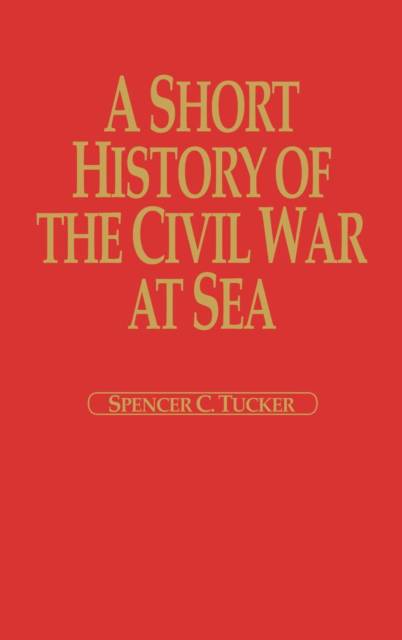
Description
While fighting on land continues to hold center stage, recently much more attention has been focused on the Civil War at sea. And for good reason. Naval operations decided the outcome of the war as the North exploited its significant naval and maritime advantage to turn the war on land in its favor. In A Short History of the Civil War at Sea, Spencer C. Tucker, eminent naval and military historian and endowed chair at the Virginia Military Institute, provides a concise and lively overview of the 'blue water' Civil War, or fighting on the seas and attacks directed from the sea. This volume covers the drama of significant naval battles, like the first clash of ironclads at Hampton Roads, the Union capture of New Orleans, fierce action in the Charleston Harbor, and the Battle of Mobile Bay. A Short History of the Civil War at Sea also discusses important themes, like the technological revolution in naval warfare; the impact of naval operations on U.S. and Confederate foreign relations; the Confederate use of torpedoes, submarines, and commerce raiders; and the Union's successful strategy of blockade. The struggle at sea might not have been as bloody as the fighting on land, but it was every bit as interesting and included a colorful cast of characters, like David G. Farragut, the North's highest ranking and most accomplished naval officer, and Confederate naval officer, commerce raider, and 'Rebel Seadog' Raphael Semmes. And the advances of naval technology during the Civil War are fascinating-from the use of new Dahlgren guns to the design and redesign of the ironclads to the extensive use of mines and the development of submarines. Prof. Tucker covers it all in this new book, and his knowledge and skills as a storyteller shine. A Short History of the Civil War at Sea will entertain and inform students, scholars, and Civil War enthusiasts.
Spécifications
Parties prenantes
- Auteur(s) :
- Editeur:
Contenu
- Nombre de pages :
- 188
- Langue:
- Anglais
- Collection :
Caractéristiques
- EAN:
- 9780842028677
- Date de parution :
- 01-10-01
- Format:
- Livre relié
- Format numérique:
- Genaaid
- Dimensions :
- 148 mm x 224 mm
- Poids :
- 403 g


Seulement chez Librairie Club
+ 508 points sur votre carte client de Librairie Club
Cadeau


Les avis
Nous publions uniquement les avis qui respectent les conditions requises. Consultez nos conditions pour les avis.