


- Retrait en 2 heures
- Assortiment impressionnant
- Paiement sécurisé
- Toujours un magasin près de chez vous
- Retrait en 2 heures
- Assortiment impressionnant
- Paiement sécurisé
- Toujours un magasin près de chez vous



37,95 €
+ 75 points
Passer une commande en un clic
Payer en toute sécurité


Livraison en Belgique: 3,99 €
Livraison en magasin gratuite
Description
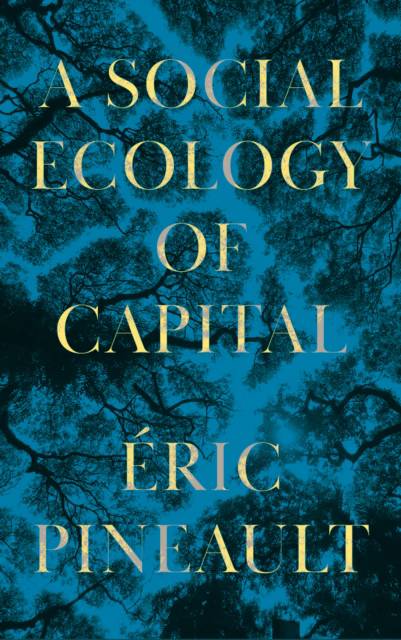
Faced with an ecological crisis of existential proportions, the economic relations of capitalism have only fanned the flames. The transformation of property relations is an urgent necessity, but not, in itself, enough to save us. Enter 'degrowth': a concept that radically challenges contemporary life, culture and economics as we know it. Through an impressive synthesis of the traditions of eco-Marxism and feminist ecological economics, Éric Pineault presents a well-rounded critique of contemporary capitalist growth and its socio-ecological contradictions, in which growth is understood as both a biophysical and accumulation process. The book provides fresh answers to key questions of current socio-ecological debates: Why does capitalist society depend on accelerating growth? Why is the constant upscaling of its economic process necessary for its social stability? How does this deepen the ecological contradictions that humanity now faces? And what can we learn from this for our understanding of emancipatory futures?'A timely and urgent analysis which seeks to comprehend our ecological plight through an elucidation of monopoly capital' - Gareth Dale, Reader in Political Economy, Brunel University Capital is pushing into motion ever larger global material flows. In doing so it has come to depend on massive expenditures of energy, putting to work fossil fuels and the machines they animate to transform the world, accumulate power and grow the economy. The ecological relations and crises of today's societies are driven by the processes of extraction of the elements that come together as a throughput of material and energy flows controlled by capital and shaped by its imperative of valorization. In A Social Ecology of Capital, Éric Pineault proposes an original model of the fossil social metabolism that has sustained the growth of advanced capitalism in the last century. Drawing on ecological economics and critical political economy, the book analyses how the social structures of accumulation, production, consumption and waste determine and regulate the material flow and the accumulation of material artifacts. Showing how social relations shape the ecology of capital, the book highlights the contradictions humanity now faces.
Spécifications
Parties prenantes
- Auteur(s) :
- Editeur:
Contenu
- Nombre de pages :
- 208
- Langue:
- Anglais
Caractéristiques
- EAN:
- 9780745343778
- Date de parution :
- 20-02-23
- Format:
- Livre broché
- Format numérique:
- Trade paperback (VS)
- Dimensions :
- 138 mm x 214 mm
- Poids :
- 217 g


Seulement chez Librairie Club
+ 75 points sur votre carte client de Librairie Club
Cadeau

Cadeau


Les avis
Nous publions uniquement les avis qui respectent les conditions requises. Consultez nos conditions pour les avis.