


- Retrait en 2 heures
- Assortiment impressionnant
- Paiement sécurisé
- Toujours un magasin près de chez vous
- Retrait en 2 heures
- Assortiment impressionnant
- Paiement sécurisé
- Toujours un magasin près de chez vous



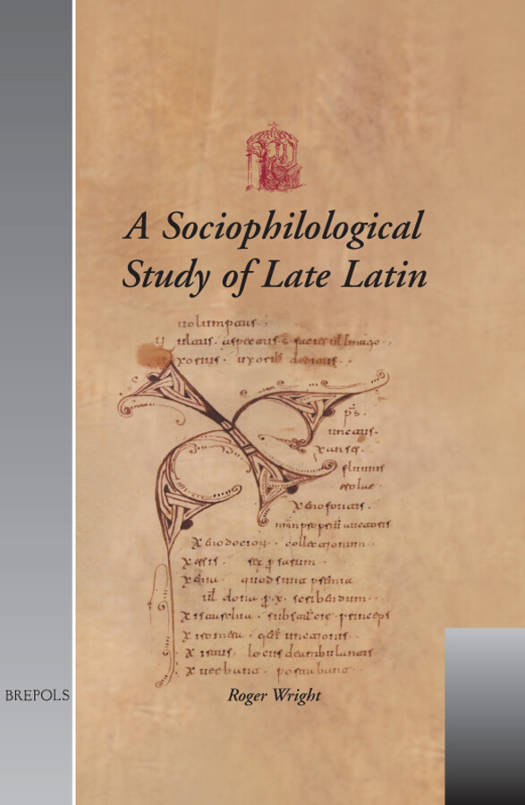
A Sociophilological Study of Late Latin
Roger Wright
79,50 €
+ 159 points
Description
Sociophilology is a word coined by the author to describe a discipline which combines traditional rigorous philological analysis of texts with the recent insights of sociolinguistics. From these combined perspectives he provides an understanding both of Late Latin (Early Romance) language and of the circumstances of the scribes who have given us the evidence. The chronological span ranges from the later part of the Roman Empire to the thirteenth century. The focus is on the processes by which Latin, at different times in different places, came to be thought of as being several different languages (formal Medieval Latin and less formal Romance Languages); these conceptual distinctions are most directly represented by the decisions taken to write some texts in a new way. There are six sections in the book, each containing four chapters: Section A provides an overview, and is entitled Latin, Medieval Latin and Romance; B, Texts and Language in Late Antiquity; C, The Ninth Century; D, Italy and Spain in the Tenth and Eleventh Centuries; E, Spain in the Twelfth and Thirteenth Centuries; F, Sociophilology and Historical Linguistics; followed by a concluding summary chapter, bibliography and indexes. Scholars and Texts investigated include Priscian, Boniface, Rhythmic Poetry, Alcuin, Eulogio de Cordoba, The Strasbourg Oaths, Glossaries, Glosses, and the earliest Romance texts of the Iberian Peninsula; general topics considered in detail, within the Late Latin and Early Romance world, include periodization, the influence of other languages on the development of Latin, change of language names, the nature of sound change, the relationship between speech and writing, the relationship between historical linguistics and sociolinguistics, and the relationship between language-internal variation and language splits.
Spécifications
Parties prenantes
- Auteur(s) :
- Editeur:
Contenu
- Nombre de pages :
- 398
- Langue:
- Français
- Collection :
- Tome:
- n° 10
Caractéristiques
- EAN:
- 9782503513386
- Date de parution :
- 21-01-03
- Format:
- Livre relié
- Format numérique:
- Genaaid
- Dimensions :
- 168 mm x 246 mm
- Poids :
- 861 g


Seulement chez Librairie Club
+ 159 points sur votre carte client de Librairie Club
Cadeau


Les avis
Nous publions uniquement les avis qui respectent les conditions requises. Consultez nos conditions pour les avis.