


- Retrait en 2 heures
- Assortiment impressionnant
- Paiement sécurisé
- Toujours un magasin près de chez vous
- Retrait en 2 heures
- Assortiment impressionnant
- Paiement sécurisé
- Toujours un magasin près de chez vous



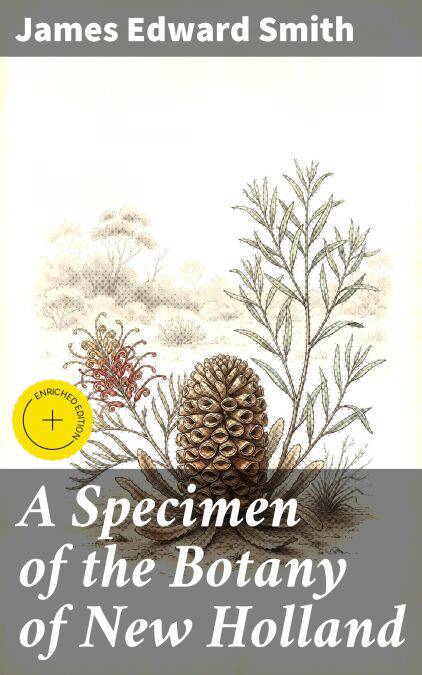
A Specimen of the Botany of New Holland EBOOK
Enriched edition. Exploring the Flora of Australia: A Botanical Journey in New Holland
James Edward Smith
Ebook | Anglais
1,99 €
+ 1 points
Description
In "A Specimen of the Botany of New Holland," James Edward Smith meticulously catalogs and describes the diverse flora of Australia during the late 18th century, a time when European understanding of the continent's biodiversity was still nascent. Smith's work is characterized by its empirical observations and scholarly precision, drawing from over 100 botanical illustrations that illuminate the unique adaptations and complexities of New Holland's ecosystems. The text serves not only as a scientific compendium but also as a reflection of the Enlightenment's burgeoning curiosity about the natural world, emphasizing the interconnections between new discoveries and botanical classification. James Edward Smith, a prominent botanist and founder of the Linnean Society, was deeply influenced by his contemporaries and the expanding realm of botanical sciences. His extensive travels and interactions with other naturalists, combined with a profound dedication to taxonomy and plant classification, propelled him to document the unique botany of Australia. Smith'Äôs background in medicine and passion for natural history further shaped his meticulous approach in cataloging the flora of this distinct region. This landmark text is essential reading for anyone interested in botany, ecology, or the history of scientific exploration. Smith'Äôs detailed observations and enlightening commentary provide invaluable insights into the evolution of plant sciences, making this book a treasured resource for scholars, conservationists, and nature enthusiasts alike.
In this enriched edition, we have carefully created added value for your reading experience:
- A succinct Introduction situates the work's timeless appeal and themes.
- The Synopsis outlines the central plot, highlighting key developments without spoiling critical twists.
- A detailed Historical Context immerses you in the era's events and influences that shaped the writing.
- A thorough Analysis dissects symbols, motifs, and character arcs to unearth underlying meanings.
- Reflection questions prompt you to engage personally with the work's messages, connecting them to modern life.
- Hand‐picked Memorable Quotes shine a spotlight on moments of literary brilliance.
- Interactive footnotes clarify unusual references, historical allusions, and archaic phrases for an effortless, more informed read.
In this enriched edition, we have carefully created added value for your reading experience:
- A succinct Introduction situates the work's timeless appeal and themes.
- The Synopsis outlines the central plot, highlighting key developments without spoiling critical twists.
- A detailed Historical Context immerses you in the era's events and influences that shaped the writing.
- A thorough Analysis dissects symbols, motifs, and character arcs to unearth underlying meanings.
- Reflection questions prompt you to engage personally with the work's messages, connecting them to modern life.
- Hand‐picked Memorable Quotes shine a spotlight on moments of literary brilliance.
- Interactive footnotes clarify unusual references, historical allusions, and archaic phrases for an effortless, more informed read.
Spécifications
Parties prenantes
- Auteur(s) :
- Editeur:
Contenu
- Nombre de pages :
- 31
- Langue:
- Anglais
Caractéristiques
- EAN:
- 4064066061944
- Date de parution :
- 07-12-20
- Format:
- Ebook
- Protection digitale:
- Digital watermarking
- Format numérique:
- ePub


Seulement chez Librairie Club
+ 1 points sur votre carte client de Librairie Club
Cadeau


Les avis
Nous publions uniquement les avis qui respectent les conditions requises. Consultez nos conditions pour les avis.