


- Retrait en 2 heures
- Assortiment impressionnant
- Paiement sécurisé
- Toujours un magasin près de chez vous
- Retrait en 2 heures
- Assortiment impressionnant
- Paiement sécurisé
- Toujours un magasin près de chez vous



111,95 €
+ 223 points
Description
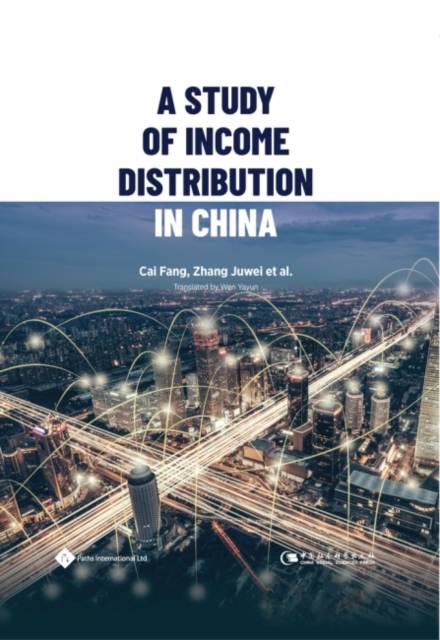
As the country with the fastest economic growth in the world, China is faced with the extremely complex income distribution showing both the commonalities of market economies with rapid development and the particularity of China's institutional mechanism. To study and understand income distribution, it is not only necessary to start with the general law of the development of market economy but with China's unique system and mechanism. Otherwise, it will be difficult to clearly depict the essence of China's income distribution. This book is the result of the major project of the National Social Science Fund. This project on China's income distribution, one of the four major issues when central government leaders came to the Chinese Academy of Social Sciences in spring festival of 2011, becomes the task of the Institute of Population and Labor Economics. According to the plan, the project was aided by experts from other institutes of the Academy of Social Sciences and well-known experts from other institutions outside the Academy of Social Sciences. China's implementation of a socialist market economy determines that China's income distribution has its own unique law in marketization. China's basic economic system changes into public ownership as its main body with a variety of economic components developing together, requiring its income distribution to change into distribution according to both work and its production factors. Therefore, from the perspective of distribution system, China has both its commonalities and particularity compared with other market economies. Among them, distribution according to production factors reflects the distribution law of market economy and distribution according to work reflects the distribution characteristics of socialist public economy. Different distribution modes will inevitably result in different distribution. China's income distribution shares that of average market economy and particularity of its basic economic system. These two is intertwined and influence each other, thus leading to the complexity of China's income distribution. With the transition from planned economy to market economy, China's basic economic system has changed from single public ownership to public ownership as the main body with a variety of economic components developing together and the distribution system has also changed from distribution according to work into distribution according to both work and various production factors. In this process, the relatively average income distribution pattern according to work formed under public ownership will be broken and the distribution mechanism of contribution according to production factors will be gradually formed with the income gap widening, giving rise to serious income distribution.
Spécifications
Parties prenantes
- Auteur(s) :
- Traducteur(s):
- Editeur:
Contenu
- Nombre de pages :
- 392
- Langue:
- Anglais
Caractéristiques
- EAN:
- 9781844646708
- Date de parution :
- 30-04-22
- Format:
- Livre relié
- Format numérique:
- Genaaid
- Dimensions :
- 152 mm x 229 mm
- Poids :
- 857 g


Seulement chez Librairie Club
+ 223 points sur votre carte client de Librairie Club
Cadeau


Les avis
Nous publions uniquement les avis qui respectent les conditions requises. Consultez nos conditions pour les avis.