


- Retrait en 2 heures
- Assortiment impressionnant
- Paiement sécurisé
- Toujours un magasin près de chez vous
- Retrait gratuit dans votre magasin Club
- 7.000.0000 titres dans notre catalogue
- Payer en toute sécurité
- Toujours un magasin près de chez vous


10,36 €
+ 10 points
Description
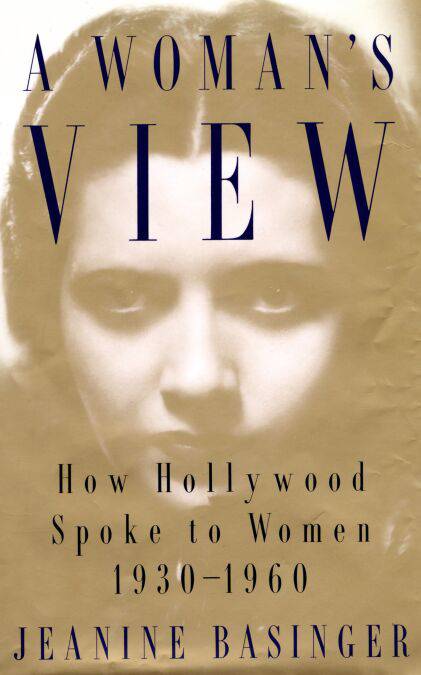
Now, Voyager, Stella Dallas, Leaver Her to Heaven, Imitation of Life, Mildred Pierce, Gilda…these are only a few of the hundreds of “women’s films” that poured out of Hollywood during the thirties, forties, and fifties. The films were widely disparate in subject, sentiment, and technique, they nonetheless shared one dual purpose: to provide the audience (of women, primarily) with temporary liberation into a screen dream—of romance, sexuality, luxury, suffering, or even wickedness—and then send it home reminded of, reassured by, and resigned to the fact that no matter what else she might do, a woman’s most important job was…to be a woman. Now, with boundless knowledge and infectious enthusiasm, Jeanine Basinger illuminates the various surprising and subversive ways in which women’s films delivered their message.
Basinger examines dozens of films, exploring the seemingly intractable contradictions at the convoluted heart of the woman’s genre—among them, the dilemma of the strong and glamorous woman who cedes her power when she feels it threatening her personal happiness, and the self-abnegating woman whose selflessness is not always as “noble” as it appears. Basinger looks at the stars who played these women and helps us understand the qualities—the right off-screen personae, the right on-screen attitudes, the right faces—that made them personify the woman’s film and equipped them to make believable drama or comedy out of the crackpot plots, the conflicting ideas, and the exaggerations of real behavior that characterize these movies.
In each of the films the author discusses—whether melodrama, screwball comedy, musical, film noir, western, or biopic—a woman occupies the center of her particular universe. Her story—in its endless variations of rags to riches, boy meets girl, battle of the sexes, mother love, doomed romance—inevitably sends a highly potent mixed message: Yes, you women belong in your “proper place” (that is, content with the Big Three of the women’s film world—men, marriage, and motherhood), but meanwhile, and paradoxically, see what fun, glamour, and power you can enjoy along the way. A Woman’s View deepens our understanding of the times and circumstances and attitudes out of which these movies were created.
Basinger examines dozens of films, exploring the seemingly intractable contradictions at the convoluted heart of the woman’s genre—among them, the dilemma of the strong and glamorous woman who cedes her power when she feels it threatening her personal happiness, and the self-abnegating woman whose selflessness is not always as “noble” as it appears. Basinger looks at the stars who played these women and helps us understand the qualities—the right off-screen personae, the right on-screen attitudes, the right faces—that made them personify the woman’s film and equipped them to make believable drama or comedy out of the crackpot plots, the conflicting ideas, and the exaggerations of real behavior that characterize these movies.
In each of the films the author discusses—whether melodrama, screwball comedy, musical, film noir, western, or biopic—a woman occupies the center of her particular universe. Her story—in its endless variations of rags to riches, boy meets girl, battle of the sexes, mother love, doomed romance—inevitably sends a highly potent mixed message: Yes, you women belong in your “proper place” (that is, content with the Big Three of the women’s film world—men, marriage, and motherhood), but meanwhile, and paradoxically, see what fun, glamour, and power you can enjoy along the way. A Woman’s View deepens our understanding of the times and circumstances and attitudes out of which these movies were created.
Spécifications
Parties prenantes
- Auteur(s) :
- Editeur:
Contenu
- Nombre de pages :
- 528
- Langue:
- Anglais
Caractéristiques
- EAN:
- 9780307831545
- Date de parution :
- 03-09-13
- Format:
- Ebook
- Protection digitale:
- Adobe DRM
- Format numérique:
- ePub


Seulement chez Librairie Club
+ 10 points sur votre carte client de Librairie Club
Cadeau

Cadeau


Les avis
Nous publions uniquement les avis qui respectent les conditions requises. Consultez nos conditions pour les avis.