


- Retrait en 2 heures
- Assortiment impressionnant
- Paiement sécurisé
- Toujours un magasin près de chez vous
- Retrait gratuit dans votre magasin Club
- 7.000.0000 titres dans notre catalogue
- Payer en toute sécurité
- Toujours un magasin près de chez vous

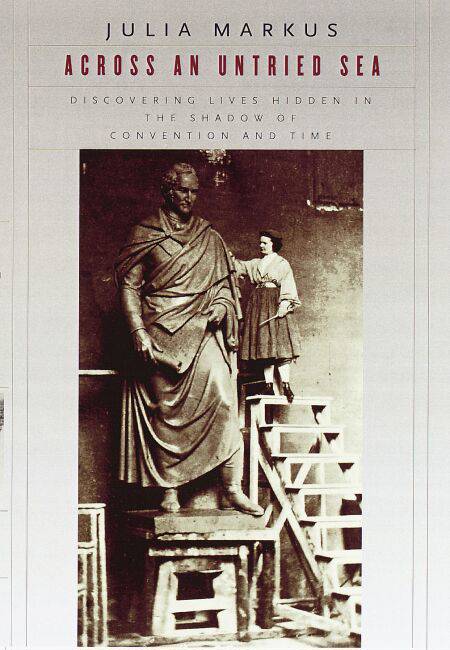
Across an Untried Sea EBOOK
Discovering Lives Hidden in the Shadow of Convention and Time
Julia Markus
Ebook | Anglais
17,27 €
+ 17 points
Description
From the much acclaimed author of Dared and Done: The Marriage of Elizabeth Barrett and Robert Browning, a new book that retrieves the lives of Victorian women--writers, actresses, poets, journalists, sculptors, and social reformers--celebrated in their day but forgotten in ours.
Julia Markus focuses in particular on the American Charlotte Cushman, the most famous English-speaking actress of her day, and on the Scottish Jane Welsh Carlyle, a brilliant London hostess who gave up private ambition to become the wife of her friend Thomas Carlyle.
Charlotte Cushman became an international star on the New York and London stage, and her Romeo and Hamlet were sensations. An independent woman with shrewd business sense who made her own fortune and supported her entire family, she dressed like a man from the waist up and had a succession of female lovers, each one of whom she planned to live with for life, each of whom she 'married.'
Jane Welsh Carlyle, literary hostess, unparalleled letter writer and chronicler of her times--who, after a passionate youthful love affair, resolved to marry genius or not at all--became the wife of the revered and lionized philosopher Thomas Carlyle, a difficult, demanding man with whom she had a sexless marriage.
Interweaving the worlds of Charlotte Cushman and Jane Carlyle--the worlds of expatriate Rome, literary London, New York, and St. Louis--Markus gathers together a number of interrelated and renowned women who were relegated in the public eye to the position of Virgin Queen (no matter how much married) or Old Maid, but who were, in fact, privately leading vibrant, independent, sexual lives. Among them: Matilda Hays, translator of George Sand; Harriet Hosmer, who resolved to become the world's first professional woman sculptor; and Emma Stebbins, whom Cushman 'married' and who created the Bethesda Fountain in New York's Central Park. Here, too, are the people who sought the friendship of Cushman and Carlyle, including Ralph Waldo Emerson, Horace Mann, Elizabeth Peabody, President Lincoln's Secretary of State William H. Seward, Geraldine Jewsbury, and Rosa Bonheur.
Making use of letters, diaries, newspaper accounts, and journals of the day, many of them overlooked and unpublished, Julia Markus rediscovers lives forgotten in the shadows of convention and shows how these remarkable women--seemingly separated by nationality, class, and sexual inclination--met, formed alliances, and influenced one another, forging changes in themselves and in their time.
Julia Markus focuses in particular on the American Charlotte Cushman, the most famous English-speaking actress of her day, and on the Scottish Jane Welsh Carlyle, a brilliant London hostess who gave up private ambition to become the wife of her friend Thomas Carlyle.
Charlotte Cushman became an international star on the New York and London stage, and her Romeo and Hamlet were sensations. An independent woman with shrewd business sense who made her own fortune and supported her entire family, she dressed like a man from the waist up and had a succession of female lovers, each one of whom she planned to live with for life, each of whom she 'married.'
Jane Welsh Carlyle, literary hostess, unparalleled letter writer and chronicler of her times--who, after a passionate youthful love affair, resolved to marry genius or not at all--became the wife of the revered and lionized philosopher Thomas Carlyle, a difficult, demanding man with whom she had a sexless marriage.
Interweaving the worlds of Charlotte Cushman and Jane Carlyle--the worlds of expatriate Rome, literary London, New York, and St. Louis--Markus gathers together a number of interrelated and renowned women who were relegated in the public eye to the position of Virgin Queen (no matter how much married) or Old Maid, but who were, in fact, privately leading vibrant, independent, sexual lives. Among them: Matilda Hays, translator of George Sand; Harriet Hosmer, who resolved to become the world's first professional woman sculptor; and Emma Stebbins, whom Cushman 'married' and who created the Bethesda Fountain in New York's Central Park. Here, too, are the people who sought the friendship of Cushman and Carlyle, including Ralph Waldo Emerson, Horace Mann, Elizabeth Peabody, President Lincoln's Secretary of State William H. Seward, Geraldine Jewsbury, and Rosa Bonheur.
Making use of letters, diaries, newspaper accounts, and journals of the day, many of them overlooked and unpublished, Julia Markus rediscovers lives forgotten in the shadows of convention and shows how these remarkable women--seemingly separated by nationality, class, and sexual inclination--met, formed alliances, and influenced one another, forging changes in themselves and in their time.
Spécifications
Parties prenantes
- Auteur(s) :
- Editeur:
Contenu
- Nombre de pages :
- 352
- Langue:
- Anglais
Caractéristiques
- EAN:
- 9780307832986
- Date de parution :
- 12-02-13
- Format:
- Ebook
- Protection digitale:
- Adobe DRM
- Format numérique:
- ePub


Seulement chez Librairie Club
+ 17 points sur votre carte client de Librairie Club
Cadeau

Cadeau


Les avis
Nous publions uniquement les avis qui respectent les conditions requises. Consultez nos conditions pour les avis.