


En raison d'une grève chez bpost, des retards de livraison peuvent survenir. Besoin de quelque chose en urgence ? Optez pour un retrait en magasin ou rendez-vous dans une Librairie Club à proximité.
- Retrait en 2 heures
- Assortiment impressionnant
- Paiement sécurisé
- Toujours un magasin près de chez vous
En raison d'une grève chez bpost, des retards de livraison peuvent survenir. Besoin de quelque chose en urgence ? Optez pour un retrait en magasin ou rendez-vous dans une Librairie Club à proximité.
- Retrait en 2 heures
- Assortiment impressionnant
- Paiement sécurisé
- Toujours un magasin près de chez vous



Description
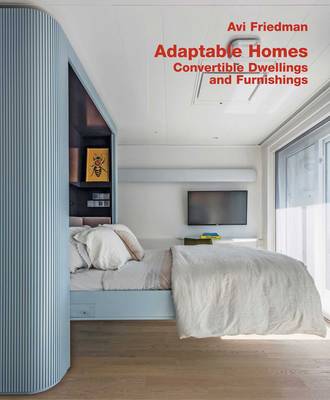
Rising housing and energy costs, the emergence of the non-traditional small household and an increase in the number of seniorshave contributed to a renewed interest in adaptable dwellings. These designs can be defined as units or furnishings that permitchange of space or function at any time. With their popularity rising rapidly around the world, people are becoming aware of the environmental and budgetary implications of owning a very large single-family home, especially when some spaces in these homes are hardly ever used. Notable additional advantages of adaptable homes are lower property taxes and construction costs, and time savings through possible prefabrication. To be efficient, adaptable dwellings must be carefully designed since minor decisions can have a large impact on their use. Light, boundaries, circulation, choice of materials and furnishings are some of the tools that can be used by designers to resolve challenges and expand spatial perception. Therefore, a good adapt-able design should not only be versatile and efficient but also avoid simplicity and dullness.Japanese architects, such as Shigeru Ban, have pioneered solutions to these problems by using curtains or shutters to separatebetween outdoors and indoors. Such fixtures can be opened during the day to let in light and fresh air but can be closed at night.Those designers also encourage the inhabitants to engage with the outside by creating large, easily accessible rooftop spaces that can used for outdoor seating, for example. When partitions must be installed, transparent ones are recommended since they still permit the dispersal of light. Moveable partitions, or sliding panels, are also useful in defining spaces since they allow one to temporarily redefine small spaces according to need. Lastly, an open floor concept with large exterior openings permitviews of the outside which, as noted above, can increase the perception of a house's size. Increasing the floor height can greatly expand space without enlarging the floor area.The book displays a collection of outstanding innovative residential projects and furnishings made to accommodate the daily oryearly changing living space needs of occupants.
Spécifications
Parties prenantes
- Auteur(s) :
- Editeur:
Contenu
- Nombre de pages :
- 144
- Langue:
- Anglais
Caractéristiques
- EAN:
- 9783869050485
- Date de parution :
- 25-08-26
- Format:
- Livre relié
- Format numérique:
- Genaaid
- Dimensions :
- 233 mm x 284 mm
- Poids :
- 693 g


Seulement chez Librairie Club
Cadeau


Les avis
Nous publions uniquement les avis qui respectent les conditions requises. Consultez nos conditions pour les avis.