


- Retrait en 2 heures
- Assortiment impressionnant
- Paiement sécurisé
- Toujours un magasin près de chez vous
- Retrait en 2 heures
- Assortiment impressionnant
- Paiement sécurisé
- Toujours un magasin près de chez vous




158,95 €
+ 317 points
Format
Description
Demonstrates how film adaptations intersect with feminist discourse in neoliberal Mexico.
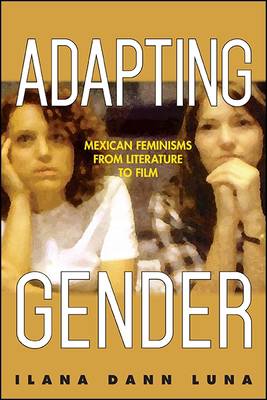
Adapting Gender offers a cogent introduction to Mexico's film industry, the history of women's filmmaking in Mexico, a new approach to adaptation as a potential feminist strategy, and a cultural history of generational changes in Mexico. Ilana Dann Luna examines how adapted films have the potential to subvert not only the intentions of the source text, but how they can also interrupt the hegemony of gender stereotypes in a broader socio-political context. Luna follows the industrial shifts that began with Salinas de Gortari's presidency, which made the long 1990s the precise moment in which subversive filmmakers, particularly women, were able to participate more fully in the industry and portrayed the lived experiences of women and non-gender-conforming men. The analysis focuses on Busi Cortés's El secreto de Romelia (1988), an adaptation of Rosario Castellanos's short novel El viudo Román (1964); Sabina Berman and Isabelle Tardán's Entre Pancho Villa y una mujer desnuda (1996), an adaptation of Berman's own play, Entre Villa y una mujer desnuda (1992); Guita Schyfter's Novia que te vea (1993), an adaptation of Rosa Nissán's eponymous novel (1992); and Jaime Humberto Hermosillo's De noche vienes, Esmeralda (1997), an adaptation of Elena Poniatowska's short story "De noche vienes" (1979). These adapted texts established a significant alternative to monolithic notions of national (gendered) identity, while critiquing, updating, and even queering, notions of feminism in the Mexican context.
Spécifications
Parties prenantes
- Auteur(s) :
- Editeur:
Contenu
- Nombre de pages :
- 312
- Langue:
- Anglais
- Collection :
Caractéristiques
- EAN:
- 9781438468273
- Date de parution :
- 01-01-18
- Format:
- Livre relié
- Format numérique:
- Genaaid
- Dimensions :
- 155 mm x 231 mm
- Poids :
- 612 g


Seulement chez Librairie Club
+ 317 points sur votre carte client de Librairie Club
Cadeau


Les avis
Nous publions uniquement les avis qui respectent les conditions requises. Consultez nos conditions pour les avis.