


- Retrait en 2 heures
- Assortiment impressionnant
- Paiement sécurisé
- Toujours un magasin près de chez vous
- Retrait en 2 heures
- Assortiment impressionnant
- Paiement sécurisé
- Toujours un magasin près de chez vous



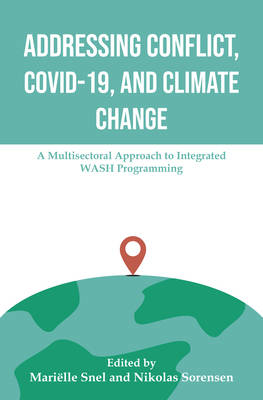
Addressing Conflict, Covid, and Climate Change
A Multisectoral Approach to Integrated Wash Programming
Marielle Snel, Nikolas Sorensen
Livre broché | Anglais
70,95 €
+ 141 points
Description
Humanitarian crises are growing in length and complexity due to external destabilising pressures including conflict, COVID, and climate change, with the average length of refugee situations now exceeding twenty years. Until now, there has not been any specific WASH publication of this kind that reflects on these fundamental external factors that will play a vital role in the delivery of WASH services over the humanitarian-development divided within the context of fundamental sub-sectors. In their second insightful book on this important topic, Marielle Snel and Nik Sorensen call for humanitarian and development WASH professionals to work together in a more coordinated manner to develop more effective humanitarian WASH programming that keeps long-term development goals in mind. In this book, the authors bring together experts from across the humanitarian/development fields, with a focus on the humanitarian-development-peace nexus and a multi-sectoral response to connecting humanitarian and development sectors as an innovative answer to bridging these challenges. Contributors reference case studies to look more closely at ways each sub-field could better integrate with WASH programming. There is no one size fits all solution to an integrated humanitarian-development response. However, the authors and contributors in this book provide deeper insights into the "how" question underlying integrated WASH programming. This work will be of interest not only to professionals working in the humanitarian and development WASH sector, but also to others across the humanitarian, development, and peace sectors ranging from government officials to managers working directly or indirectly around WASH.
Spécifications
Parties prenantes
- Auteur(s) :
- Editeur:
Contenu
- Nombre de pages :
- 204
- Langue:
- Anglais
Caractéristiques
- EAN:
- 9781788532228
- Date de parution :
- 15-07-23
- Format:
- Livre broché
- Format numérique:
- Trade paperback (VS)
- Dimensions :
- 156 mm x 234 mm
- Poids :
- 294 g


Seulement chez Librairie Club
+ 141 points sur votre carte client de Librairie Club
Cadeau


Les avis
Nous publions uniquement les avis qui respectent les conditions requises. Consultez nos conditions pour les avis.