


- Retrait en 2 heures
- Assortiment impressionnant
- Paiement sécurisé
- Toujours un magasin près de chez vous
- Retrait en 2 heures
- Assortiment impressionnant
- Paiement sécurisé
- Toujours un magasin près de chez vous



331,95 €
+ 663 points
Description
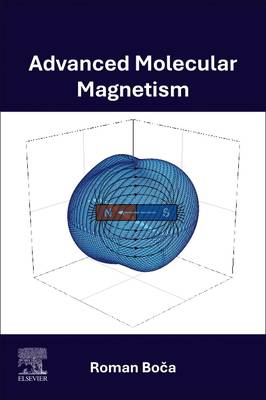
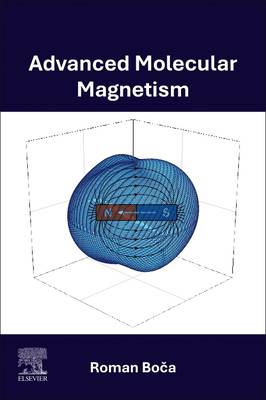
Advanced Molecular Magnetism provides a rigorous overview of the magnetic properties of molecular and extended inorganic systems. Sections cover the fundamentals of magnetic data recording and analysis, establishing exchange interactions as a foundational concept, including discussions on exchange interactions involving both d- and f-block elements, the role of magnetic anisotropy, single-molecule magnets, and spin crossover phenomena. Content emphasizes the correlation of magnetic property analysis with complementary techniques such as UV-Vis and electron paramagnetic resonance (EPR) spectroscopy. In addition, the book provides a thorough overview of electronic energy levels in transition metal complexes is provided, covering electronic terms, multiplets, and Zeeman splitting. The interface between quantum mechanics and macroscopic thermodynamic properties is explored through statistical thermodynamics, and the book reviews the major types of magnetic materials--diamagnetic, paramagnetic, ferromagnetic, and antiferromagnetic--with a focus on their underlying principles and real-world examples. Methods for deriving magnetochemical formulae for Curie paramagnets, zero-field splitting systems, T- and E-term systems, and pure multiplet systems are clearly presented, alongside practical guidance for magnetic data collection and analysis. Special attention is given to the magnetism of f-elements and the unique properties of single-molecule magnets, as well as to the correct description of many-electron states in both free atoms and those influenced by crystal fields.
Spécifications
Parties prenantes
- Auteur(s) :
- Editeur:
Contenu
- Nombre de pages :
- 656
- Langue:
- Anglais
Caractéristiques
- EAN:
- 9780443449840
- Date de parution :
- 17-03-26
- Format:
- Livre broché
- Format numérique:
- Trade paperback (VS)
- Dimensions :
- 152 mm x 228 mm
- Poids :
- 1043 g


Seulement chez Librairie Club
+ 663 points sur votre carte client de Librairie Club
Cadeau


Les avis
Nous publions uniquement les avis qui respectent les conditions requises. Consultez nos conditions pour les avis.