


- Retrait en 2 heures
- Assortiment impressionnant
- Paiement sécurisé
- Toujours un magasin près de chez vous
- Retrait en 2 heures
- Assortiment impressionnant
- Paiement sécurisé
- Toujours un magasin près de chez vous



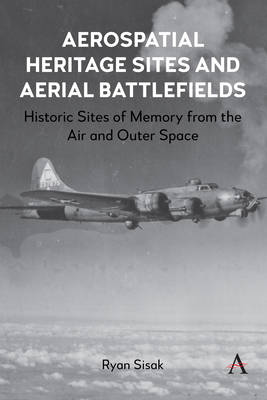
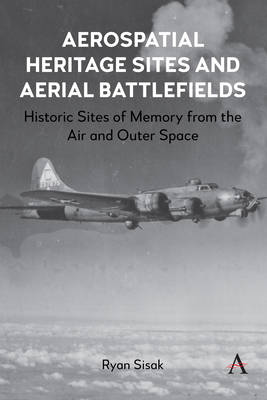
Aerospatial Heritage Sites and Aerial Battlefields
Historic Sites of Memory from the Air and Outer Space
Ryan Sisak
177,45 €
+ 354 points
Description
Explores the concept of Aerospatial Heritage Sites, examining how astronauts and aircrew ascribe meaning to places from outer space and historic airspaces, and argues for recognizing these locations as intangible heritage sites embedded within memories and narratives.
For roughly 25 years, numerous proponents have advocated for the recognition and designation of various sites on the Moon and of objects in outer space as protected heritages. In addition, beyond consideration of terrestrial battlefields from centuries before and most especially those from World War I and World War II, researchers have mainly focused their research of less-covered battlefields on underwater places such as those of the Pacific War and the D-Day landings at Normandy; even the D-Day battlefields and surrounding land and sea areas have been applied for as a World Heritage Site. Thus, stemming from the perspective of archaeologists, the majority of work on the subjects has focused on the material culture of warfare and the Space Race, along with some intangible aspects of such material objects, including underwater boundaries of battlefields, satellite orbital paths, and culture aboard the International Space Station. While some have advocated for pathways to making sites such as the Apollo 11 lunar landing site (known as Tranquility Base) a U.S. National Historic Landmark or World Heritage Site, others have focused on how to protect objects and sites on the Moon from future lunar landings and visitors. Yet despite the formation of organizations dedicated to the recognition, designation, and conservation of such heritages related to space travel or space technology, or those heritages situated in outer space or on another celestial body, or related to warfare, a conceptual and literature gap still remains.
Accordingly, Ryan Sisak sets out to fully establish the viability of recognizing intangible heritage sites from the air and outer space, through the concepts of Aerospatial Heritage Sites and aerial battlefields. As such, Sisak enters into a discourse about why such places are indeed heritages and why their heritage potential is no less appropriate than sites on the Earth or the Moon. Thus, operating from the perspective that oral and written accounts and other kinds of reminiscence can be consolidated to form an understanding of place as heritage, Sisak articulates how intangible heritage sites at altitude become heritage by virtue of a synthetic phenomenology of place and landscape. Furthermore, by applying a more scrupulous phenomenological treatment (based on Edmund Husserl's theories) to the experiences of astronauts from the Space Race, test pilots of the Cold War, fighter pilots of the Battle of Britain, and aircrews engaged in aerial battle over Europe (in the context of Allied bombing campaigns of World War II), Sisak demonstrates how the recognition of aerial and spatial sites as heritage is not merely appropriate, but also serves to apply a form of spatial justice for those who have, until now, ventured to and fought across immensely historic yet unrecognized places. Ultimately, this work aims to untether the concept of a heritage site from the physicality and tangibility of place, thereby serving a wide range of historic, cultural, and heritage-based inquiries into the value and meaning of intangible places from the past. Overall, this is about spacescapes, aeroscapes, and aerial battlefields that have been resigned to the reminiscences of the actors who manifested them historic.
Lastly, this work will link its approach to the subject of heritage sites to the concept of intercultural transfers, a key tenet of transnational history. Given the transnational nature of the events and histories of the Space Race and World War II, Sisak sets out on a parallel inquiry into the intercultural transfers that influenced the Space Race and the Cold War, the Battle of Britain, and the Allied bombing campaigns of World War II. By investigating this particular aspect of the transnational history of these events, the heritages evidenced are further demonstrated as by-products of the very transnationality of the events themselves. The purpose, then, in embarking on this line of inquiry is to color Aerospatial Heritage Sites and aerial battlefields as uniquely transnational heritages, regardless of who has already colored them as particularly meaningful and valuable.
Spécifications
Parties prenantes
- Auteur(s) :
- Editeur:
Contenu
- Nombre de pages :
- 200
- Langue:
- Anglais
- Collection :
- Tome:
- n° 1
Caractéristiques
- EAN:
- 9781839999819
- Date de parution :
- 01-12-26
- Format:
- Livre relié
- Format numérique:
- Genaaid
- Dimensions :
- 152 mm x 229 mm
- Poids :
- 453 g


Seulement chez Librairie Club
+ 354 points sur votre carte client de Librairie Club
Cadeau


Les avis
Nous publions uniquement les avis qui respectent les conditions requises. Consultez nos conditions pour les avis.