


- Retrait en 2 heures
- Assortiment impressionnant
- Paiement sécurisé
- Toujours un magasin près de chez vous
- Retrait en 2 heures
- Assortiment impressionnant
- Paiement sécurisé
- Toujours un magasin près de chez vous



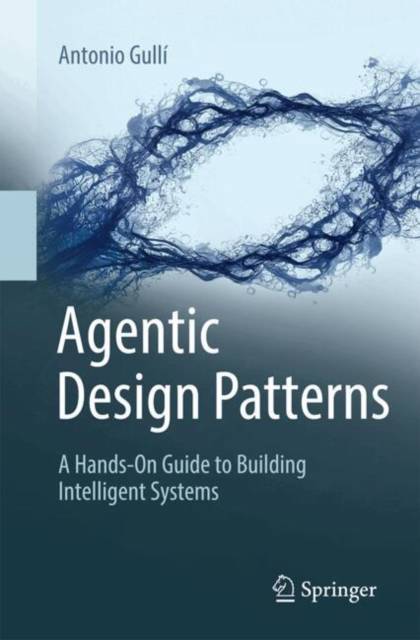
Agentic Design Patterns
A Hands-On Guide to Building Intelligent Systems
Antonio Gulli
Livre broché | Anglais
54,45 €
+ 108 points
Description
This book is a practical resource designed to help developers master the art of building sophisticated AI agents. As artificial intelligence evolves from simple reactive programs to autonomous entities capable of understanding context and making complex decisions, this book provides the essential Design Patterns and proven techniques needed to construct intelligent systems effectively. Each of the 21 Design Patterns represents a fundamental building block for creating agents that can perceive their environment, make informed decisions, and execute actions autonomously. Agentic Design Patterns: A Hands-On Guide to Building Intelligent Systems is structured as a comprehensive hands-on guide, with each chapter dedicated to a single agentic pattern. Within each chapter, you will find a detailed pattern overview, practical applications and use cases, one or more hands-on code example, and key takeaways for quick review. From foundational concepts such as Prompt Chaining and Tool Use to advanced topics like Multi-Agent Collaboration and Self-Correction, readers will gain practical knowledge they can immediately apply. While the chapters build on each other, you can also use the book as a handy reference, jumping to patterns that address your specific challenges. To provide a tangible "canvas" for the code examples, this guide utilizes three prominent agent development frameworks: LangChain and its extension LangGraph, which offer a flexible way to build complex operational sequences; Crew AI, which provides a structured framework for orchestrating multiple agents; and the Google Agent Developer Kit (Google ADK), which offers tools for building, evaluating, and deploying agents. By showcasing examples across these tools, you will gain a broad understanding of how these patterns can be applied in any technical environment. Building effective agentic systems requires more than just a powerful language model; it demands structure and design. Agentic patterns provide reusable, battle-tested solutions to common challenges, much like design patterns in software engineering. They offer a common language that makes an agent's logic clearer, more maintainable, and more robust. By the end of this journey, you will possess both the theoretical understanding and the practical skills to implement these 21 essential patterns, enabling you to build more intelligent, capable, and autonomous systems on your chosen development canvas.
Spécifications
Parties prenantes
- Auteur(s) :
- Editeur:
Contenu
- Nombre de pages :
- 427
- Langue:
- Anglais
Caractéristiques
- EAN:
- 9783032014016
- Date de parution :
- 31-10-25
- Format:
- Livre broché
- Format numérique:
- Trade paperback (VS)
- Dimensions :
- 156 mm x 234 mm
- Poids :
- 653 g


Seulement chez Librairie Club
+ 108 points sur votre carte client de Librairie Club
Cadeau


Les avis
Nous publions uniquement les avis qui respectent les conditions requises. Consultez nos conditions pour les avis.