


- Retrait en 2 heures
- Assortiment impressionnant
- Paiement sécurisé
- Toujours un magasin près de chez vous
- Retrait gratuit dans votre magasin Club
- 7.000.0000 titres dans notre catalogue
- Payer en toute sécurité
- Toujours un magasin près de chez vous

8,09 €
+ 8 points
Format
Description
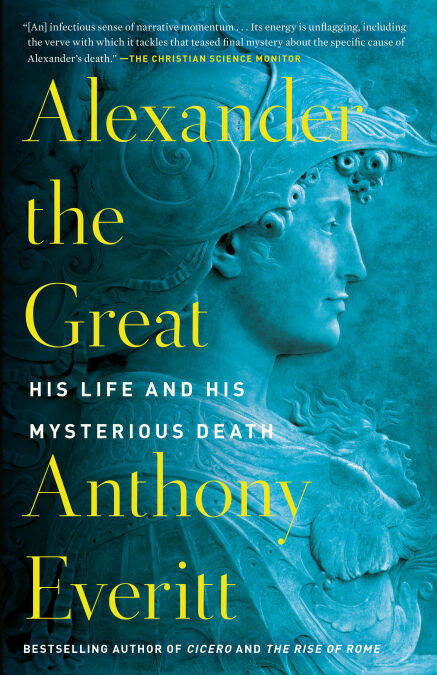
What can we learn from the stunning rise and mysterious death of the ancient world’s greatest conqueror? An acclaimed biographer reconstructs the life of Alexander the Great in this magisterial revisionist portrait.
“[An] infectious sense of narrative momentum . . . Its energy is unflagging, including the verve with which it tackles that teased final mystery about the specific cause of Alexander’s death.”—The Christian Science Monitor
More than two millennia have passed since Alexander the Great built an empire that stretched to every corner of the ancient world, from the backwater kingdom of Macedonia to the Hellenic world, Persia, and ultimately to India—all before his untimely death at age thirty-three. Alexander believed that his empire would stop only when he reached the Pacific Ocean. But stories of both real and legendary events from his life have kept him evergreen in our imaginations with a legacy that has meant something different to every era: in the Middle Ages he became an exemplar of knightly chivalry, he was a star of Renaissance paintings, and by the early twentieth century he’d even come to resemble an English gentleman. But who was he in his own time?
In Alexander the Great, Anthony Everitt judges Alexander’s life against the criteria of his own age and considers all his contradictions. We meet the Macedonian prince who was naturally inquisitive and fascinated by science and exploration, as well as the man who enjoyed the arts and used Homer’s great epic the Iliad as a bible. As his empire grew, Alexander exhibited respect for the traditions of his new subjects and careful judgment in administering rule over his vast territory. But his career also had a dark side. An inveterate conqueror who in his short life built the largest empire up to that point in history, Alexander glorified war and was known to commit acts of remarkable cruelty.
As debate continues about the meaning of his life, Alexander's death remains a mystery. Did he die of natural causes—felled by a fever—or did his marshals, angered by his tyrannical behavior, kill him? An explanation of his death can lie only in what we know of his life, and Everitt ventures to solve that puzzle, offering an ending to Alexander’s story that has eluded so many for so long.
“[An] infectious sense of narrative momentum . . . Its energy is unflagging, including the verve with which it tackles that teased final mystery about the specific cause of Alexander’s death.”—The Christian Science Monitor
More than two millennia have passed since Alexander the Great built an empire that stretched to every corner of the ancient world, from the backwater kingdom of Macedonia to the Hellenic world, Persia, and ultimately to India—all before his untimely death at age thirty-three. Alexander believed that his empire would stop only when he reached the Pacific Ocean. But stories of both real and legendary events from his life have kept him evergreen in our imaginations with a legacy that has meant something different to every era: in the Middle Ages he became an exemplar of knightly chivalry, he was a star of Renaissance paintings, and by the early twentieth century he’d even come to resemble an English gentleman. But who was he in his own time?
In Alexander the Great, Anthony Everitt judges Alexander’s life against the criteria of his own age and considers all his contradictions. We meet the Macedonian prince who was naturally inquisitive and fascinated by science and exploration, as well as the man who enjoyed the arts and used Homer’s great epic the Iliad as a bible. As his empire grew, Alexander exhibited respect for the traditions of his new subjects and careful judgment in administering rule over his vast territory. But his career also had a dark side. An inveterate conqueror who in his short life built the largest empire up to that point in history, Alexander glorified war and was known to commit acts of remarkable cruelty.
As debate continues about the meaning of his life, Alexander's death remains a mystery. Did he die of natural causes—felled by a fever—or did his marshals, angered by his tyrannical behavior, kill him? An explanation of his death can lie only in what we know of his life, and Everitt ventures to solve that puzzle, offering an ending to Alexander’s story that has eluded so many for so long.
Spécifications
Parties prenantes
- Auteur(s) :
- Editeur:
Contenu
- Nombre de pages :
- 496
- Langue:
- Anglais
Caractéristiques
- EAN:
- 9780425286548
- Date de parution :
- 26-08-19
- Format:
- Ebook
- Protection digitale:
- Adobe DRM
- Format numérique:
- ePub


Seulement chez Librairie Club
+ 8 points sur votre carte client de Librairie Club

Les avis
Nous publions uniquement les avis qui respectent les conditions requises. Consultez nos conditions pour les avis.