


- Retrait en 2 heures
- Assortiment impressionnant
- Paiement sécurisé
- Toujours un magasin près de chez vous
- Retrait gratuit dans votre magasin Club
- 7.000.0000 titres dans notre catalogue
- Payer en toute sécurité
- Toujours un magasin près de chez vous



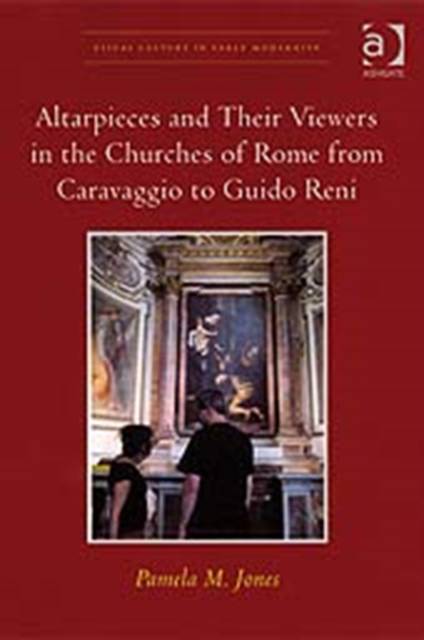
Altarpieces and Their Viewers in the Churches of Rome from Caravaggio to Guido Reni
Pamela M Jones
209,45 €
+ 418 points
Description
A social history of reception, this study focuses on sacred art and Catholicism in Rome during the late sixteenth and seventeenth centuries. The five altarpieces examined here were painted by artists who are admired today - Caravaggio, Guercino, and Guido Reni - and by the less renowned but once influential Tommaso Laureti and Andrea Commodi. By shifting attention from artistic intentionality to reception, Pamela Jones reintegrates these altarpieces into the urban fabric of early modern Rome, allowing us to see the five paintings anew through the eyes of their original audiences, both women and men, rich and poor, pious and impious. Because Italian churchmen relied, after the Council of Trent, on public altarpieces more than any other type of contemporary painting in their attempts to reform and inspire Catholic society, it is on altarpieces that Pamela Jones centers her inquiry. Through detailed study of evidence in many genres - including not only painting, prints, and art criticism, but also cheap pamphlets, drama, sermons, devotional tracts, rules of religious orders, pilgrimages, rituals, diaries, and letters - Jones shows how various beholders made meaning of the altarpieces in their aesthetic, devotional, social, and charitable dimensions. This study presents early modern Catholicism and its art in an entirely new light by addressing the responses of members of all social classes - not just elites - to art created for the public. It also provides a more accurate view of the range of religious ideas that circulated in early modern Rome by bringing to bear both officially sanctioned religious art and literature and unauthorized but widely disseminated cheap pamphlets and prints that were published without the mandatory religious permission. On this basis, Jones helps to illuminate further the insurmountable problems churchmen faced when attempting to channel the power of sacred art to elicit orthodox responses.
Spécifications
Parties prenantes
- Auteur(s) :
- Editeur:
Contenu
- Nombre de pages :
- 390
- Langue:
- Anglais
- Collection :
Caractéristiques
- EAN:
- 9780754661795
- Date de parution :
- 25-03-08
- Format:
- Livre relié
- Format numérique:
- Genaaid
- Dimensions :
- 175 mm x 246 mm
- Poids :
- 1132 g


Seulement chez Librairie Club
+ 418 points sur votre carte client de Librairie Club
Cadeau

Cadeau


Les avis
Nous publions uniquement les avis qui respectent les conditions requises. Consultez nos conditions pour les avis.