


- Retrait en 2 heures
- Assortiment impressionnant
- Paiement sécurisé
- Toujours un magasin près de chez vous
- Retrait en 2 heures
- Assortiment impressionnant
- Paiement sécurisé
- Toujours un magasin près de chez vous



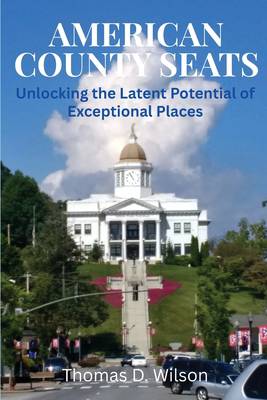
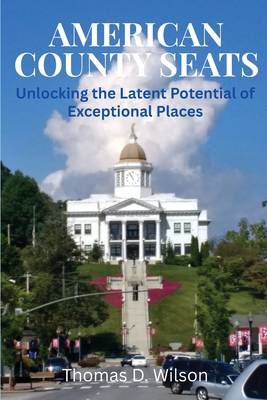
American County Seats
Unlocking the Latent Potential of Exceptional Places
Thomas Wilson
Livre broché | Anglais
38,95 €
+ 77 points
Description
Across the United States, county seats form one of the nation's most overlooked civic assets. Built to serve regional populations during earlier eras of growth, many retain historic cores rich in architecture, public space, and durable urban form. Today, they represent a large, nationwide reservoir of redevelopment potential.
American County Seats presents a comparative analysis of these communities, examining their architectural character, spatial organization, and redevelopment potential. Drawing on systematic evaluation and field observation, the book reveals how courthouses, squares, main streets, and industrial-era downtowns have left hundreds of places with surplus capacity well suited to adaptive reuse and housing.
Rather than focusing on decline or nostalgia, this study treats county seats as exceptional places with practical relevance to contemporary challenges. It offers a framework for understanding how inherited civic landscapes can support revitalization, affordability, and renewed public life, often without large-scale demolition or displacement.
For city planners, preservationists, urbanists, policymakers, and engaged citizens, this book provides a new lens on places long taken for granted, and it offers a compelling case for their future.
Spécifications
Parties prenantes
- Auteur(s) :
- Editeur:
Contenu
- Nombre de pages :
- 364
- Langue:
- Anglais
Caractéristiques
- EAN:
- 9798295798368
- Date de parution :
- 17-04-26
- Format:
- Livre broché
- Format numérique:
- Trade paperback (VS)
- Dimensions :
- 152 mm x 229 mm
- Poids :
- 485 g


Seulement chez Librairie Club
+ 77 points sur votre carte client de Librairie Club
Cadeau


Les avis
Nous publions uniquement les avis qui respectent les conditions requises. Consultez nos conditions pour les avis.