

- Retrait en 2 heures
- Assortiment impressionnant
- Paiement sécurisé
- Toujours un magasin près de chez vous
- Retrait gratuit dans votre magasin Club
- 7.000.0000 titres dans notre catalogue
- Payer en toute sécurité
- Toujours un magasin près de chez vous



Description
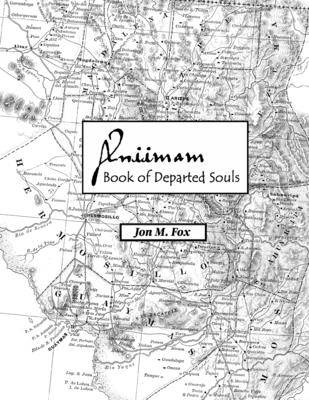
This book is very much about the Yoeme people, and their cultural and linguistic relatives the Ópata, as most of the people that are discussed in this book are from these two groups. The title given this book is Aniimam, which is the traditional Yoeme title given to the book of a family's record of its ancestors. Aniimam literally means "Departed Souls" in Hiak Noki, the Yoeme language. The word is also found spelled as "Animam." Within this book are found those ancestors of Maria Louisa Godman Leiva that originated primarily in México. Here will be found the name, date of birth, date of baptism, date of marriage, date of death, and place of burial for those ancestors that are listed, where this information is available. The purpose of this book is to provide the current descendants and also future generations of descendants, with an easily accessible reference source about their heritage. It is not meant to tell the whole story of the lives of each person, only what is known about their major life events. The information provided is well-researched, having taken more than 24 years to assemble. It is supported by copies of the original documents, if they have been available. The majority of the documents were hand-written in Spanish. Each Spanish document has a transcription and a translation into English for those not reading or understanding Spanish. Colonial Spanish and early Mexican-period Spanish handwriting can be difficult to read. In many cases there are abbreviations used in the documents that are not common or well understood in modern Spanish usage. In particular, ecclesiastical abbreviations are notoriously difficult to decipher, and not part to everyday usage.In the first section, charts show the family tree of the ancestors in the form of a kinship chart. The reason for using a kinship-style of chart is that some relationships within a Yoeme family may not be a blood or marriage relationship, but a padrones (godparents) type of relationship. This can be just as important as a blood or marriage relationship in Yoeme society. This is particularly seen in the circumstances involving the arrangement of the second marriage of José María Bonifacio Leiva in 1878. Numbers are assigned to each person that will correspond with the person's number in the second section, where documentation and additional information is found.The second section contains information about each ancestor, and copies of the original documents for each person's life events, when such documents have been located. Each document written in Spanish will be followed by a transcription, and then followed by a translation from Spanish into English. Occasionally, where primary source documentation for a life event is not available, secondary sources will be noted. The depository or location for each source document is provided.
Spécifications
Parties prenantes
- Auteur(s) :
- Editeur:
Contenu
- Nombre de pages :
- 200
- Langue:
- Anglais
Caractéristiques
- EAN:
- 9798349208003
- Date de parution :
- 01-10-25
- Format:
- Livre broché
- Format numérique:
- Trade paperback (VS)
- Dimensions :
- 216 mm x 279 mm
- Poids :
- 635 g


Seulement chez Librairie Club
+ 69 points sur votre carte client de Librairie Club
Cadeau

Cadeau


Les avis
Nous publions uniquement les avis qui respectent les conditions requises. Consultez nos conditions pour les avis.