


- Retrait en 2 heures
- Assortiment impressionnant
- Paiement sécurisé
- Toujours un magasin près de chez vous
- Retrait gratuit dans votre magasin Club
- 7.000.0000 titres dans notre catalogue
- Payer en toute sécurité
- Toujours un magasin près de chez vous



Description
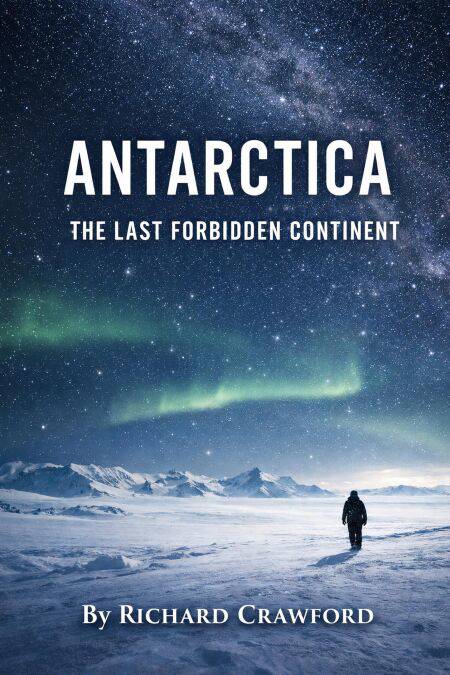
Antarctica: The Last Forbidden Continent examines the only place on Earth that exists beyond ordinary access, ownership, and public verification. Larger than Europe, holding most of the planet's freshwater, and governed by treaty rather than sovereignty, Antarctica occupies a unique position in global affairs—one that is rarely questioned and even more rarely understood.
Blending documented history, declassified military records, scientific research, and geopolitical analysis, this book traces how Antarctica evolved from a blank space on early maps into a strategically controlled continent. It explores pre–World War II expeditions, including Nazi-era reconnaissance, the unprecedented scale and early termination of Operation Highjump, and the quiet militarization of logistics during the Cold War under the banner of scientific cooperation.
The book also examines what lies beneath the ice—subglacial lakes, hidden mountain ranges, geothermal activity—and explains why limited access and centralized verification have fueled persistent narratives about secret bases and non-human presence. Rather than endorsing such claims, the work dissects how secrecy, isolation, and genuine scientific unknowns combine to produce enduring myths.
Finally, the book turns to Antarctica's future. As climate change accelerates, resources grow scarce, and global competition intensifies, Antarctica is no longer merely a scientific preserve—it is becoming a reserve of data, water, and strategic leverage. Decisions made there will shape global outcomes, even as those decisions remain largely invisible to the public.
Carefully separating evidence from speculation, Antarctica: The Last Forbidden Continent argues that the true mystery of Antarctica is not what it hides beneath the ice, but how a modern world that claims transparency continues to accept a place that cannot be independently checked.
Spécifications
Parties prenantes
- Auteur(s) :
- Editeur:
Contenu
- Langue:
- Anglais
Caractéristiques
- EAN:
- 9798233942167
- Date de parution :
- 06-01-26
- Format:
- Ebook
- Protection digitale:
- /
- Format numérique:
- ePub



Seulement chez Librairie Club
+ 6 points sur votre carte client de Librairie Club

Les avis
Nous publions uniquement les avis qui respectent les conditions requises. Consultez nos conditions pour les avis.