


En raison d'une grève chez bpost, des retards de livraison peuvent survenir. Besoin de quelque chose en urgence ? Optez pour un retrait en magasin ou rendez-vous dans une Librairie Club à proximité.
- Retrait en 2 heures
- Assortiment impressionnant
- Paiement sécurisé
- Toujours un magasin près de chez vous
En raison d'une grève chez bpost, des retards de livraison peuvent survenir. Besoin de quelque chose en urgence ? Optez pour un retrait en magasin ou rendez-vous dans une Librairie Club à proximité.
- Retrait en 2 heures
- Assortiment impressionnant
- Paiement sécurisé
- Toujours un magasin près de chez vous



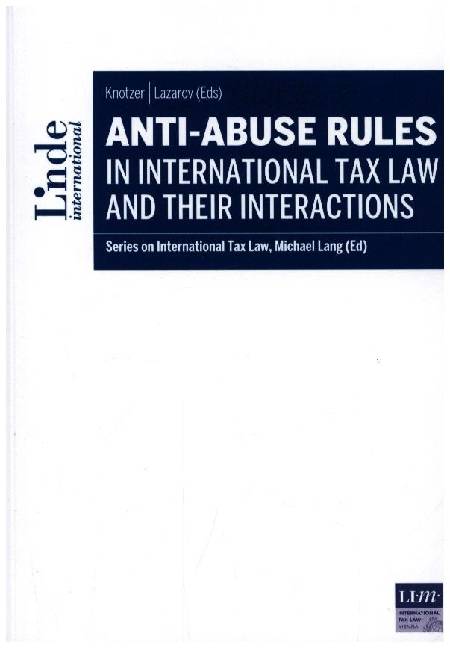
Anti-Abuse Rules in International Tax Law and their Interactions
Series on International Tax Law, Volume 146
108,45 €
+ 216 points
Description
The efforts to counter tax avoidance and tax abuse behavior have increased significantly in recent years. The OECD's project on Base Erosion and Profit Shifting (BEPS), in particular, led to the addition of anti-abuse provisions to numerous domestic tax systems and double taxation agreements. Alongside very broad and generally phrased regulations (general anti-abuse rules - GAARs), there are provisions that are more targeted (specific anti-abuse rules - SAARs) with the aim of identifying and preventing abusive tax behaviour on the basis of objective criteria. In addition, states and international organizations are increasingly relying on non-legally binding instruments to curb tax avoidance. These developments have thus led to a patchwork of provisions in domestic as well as in international law whose interaction with each other is very intricate but has hardly been researched thus far.
In addition, many of those rules also pose complex challenges in relation to EU law and corresponding case law of the Court of Justice of the EU. With the Anti-Tax Avoidance Directive, the EU has established a legal basis that obligated Member States to incorporate numerous (general and specific) anti-abuse provisions into their domestic tax legislation that were, in part, formerly unknown to their legal systems. This volume is dedicated to contribute to the academic analysis of all of these issues.
Against this background, the topic "Anti-Abuse Rules in International Tax Law and their Interactions" was chosen as the general topic for the master's theses of the part-time 2023-25 class of the postgraduate LL.M. programme in International Tax Law at WU (Vienna University of Economics and Business).
The book is divided into three parts. The contributions of the first part deal with questions of the Interaction of domestic anti-abuse measures with anti-abuse rules to be found in double taxation agreements and also analyse these questions from an EU law perspective. In the second part, the contributions delve into the intricate interactions of anti-abuse and other rules in double taxation agreements and again incorporate the EU law angle on the challenges identified. The third part of the book is dedicated to anti-abuse rules and principles under EU law and their interaction.
In addition, many of those rules also pose complex challenges in relation to EU law and corresponding case law of the Court of Justice of the EU. With the Anti-Tax Avoidance Directive, the EU has established a legal basis that obligated Member States to incorporate numerous (general and specific) anti-abuse provisions into their domestic tax legislation that were, in part, formerly unknown to their legal systems. This volume is dedicated to contribute to the academic analysis of all of these issues.
Against this background, the topic "Anti-Abuse Rules in International Tax Law and their Interactions" was chosen as the general topic for the master's theses of the part-time 2023-25 class of the postgraduate LL.M. programme in International Tax Law at WU (Vienna University of Economics and Business).
The book is divided into three parts. The contributions of the first part deal with questions of the Interaction of domestic anti-abuse measures with anti-abuse rules to be found in double taxation agreements and also analyse these questions from an EU law perspective. In the second part, the contributions delve into the intricate interactions of anti-abuse and other rules in double taxation agreements and again incorporate the EU law angle on the challenges identified. The third part of the book is dedicated to anti-abuse rules and principles under EU law and their interaction.
Spécifications
Parties prenantes
- Editeur:
Contenu
- Langue:
- Anglais
- Collection :
- Tome:
- n° 146
Caractéristiques
- EAN:
- 9783714304169
- Date de parution :
- 27-10-25
- Format:
- Livre broché
- Dimensions :
- 155 mm x 27 mm
- Poids :
- 802 g

Seulement chez Librairie Club
+ 216 points sur votre carte client de Librairie Club
Cadeau


Les avis
Nous publions uniquement les avis qui respectent les conditions requises. Consultez nos conditions pour les avis.