


- Retrait en 2 heures
- Assortiment impressionnant
- Paiement sécurisé
- Toujours un magasin près de chez vous
- Retrait en 2 heures
- Assortiment impressionnant
- Paiement sécurisé
- Toujours un magasin près de chez vous



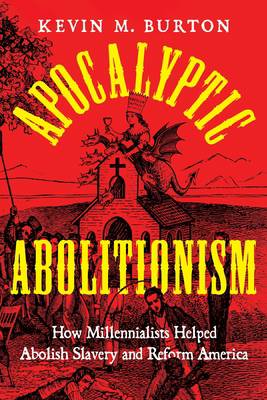
Apocalyptic Abolitionism
How Millennialists Helped Abolish Slavery and Reform America
Kevin M Burton
36,95 €
+ 73 points
Format
Description
Shows how apocalypticism helped drive anti-slavery abolitionism and inspire progressive social reform in nineteenth-century America
In March 1844, Melissa Botsford of Meriden, Connecticut, defiantly left her local Methodist church because it supported slavery and other "sins" that permeated America. Botsford was among one hundred thousand other abolitionists who abandoned their evangelical churches throughout the decade. These protesters came out with a stern apocalyptic warning: God would soon judge America--and its churches--for the sins of slavery and race prejudice. It has long been assumed that apocalypticism is antithetical to social reform. Yet in Apocalyptic Abolitionism, Kevin M. Burton uncovers the untold story of how apocalypticism shaped the abolitionist cause and helped destroy slavery in the United States. Contrary to popular opinion, the revival fires of the Second Great Awakening did not drive most evangelicals to progressive social reforms like abolitionism. Neither were the denominational schisms during that period a fight between northern abolitionists and southern slaveholders. Rather, before the Methodist and Baptist denominations split along sectional lines, most abolitionists, particularly members of the Adventist movement, had already left their churches in what was likely the largest mass exodus from mainstream evangelicalism in American history, precisely because most evangelicals opposed radical social reform movements. This volume makes the case that evangelicals receive undeserved credit for antislavery, and that it was apocalyptic abolitionists who led the way. Drawing from rare and overlooked sources to create a database of biographies of nearly 2000 people to track their religious affiliations and activism over time, Burton offers invaluable data to develop a robust framework for understanding apocalypticism, evangelicalism, and social reform politics of the nineteenth century.Spécifications
Parties prenantes
- Auteur(s) :
- Editeur:
Contenu
- Nombre de pages :
- 336
- Langue:
- Anglais
- Collection :
- Tome:
- n° 27
Caractéristiques
- EAN:
- 9781479839469
- Date de parution :
- 02-06-26
- Format:
- Livre broché
- Format numérique:
- Trade paperback (VS)
- Dimensions :
- 150 mm x 226 mm
- Poids :
- 476 g


Seulement chez Librairie Club
+ 73 points sur votre carte client de Librairie Club
Cadeau


Les avis
Nous publions uniquement les avis qui respectent les conditions requises. Consultez nos conditions pour les avis.