


- Retrait en 2 heures
- Assortiment impressionnant
- Paiement sécurisé
- Toujours un magasin près de chez vous
- Retrait en 2 heures
- Assortiment impressionnant
- Paiement sécurisé
- Toujours un magasin près de chez vous



62,95 €
+ 125 points
Description
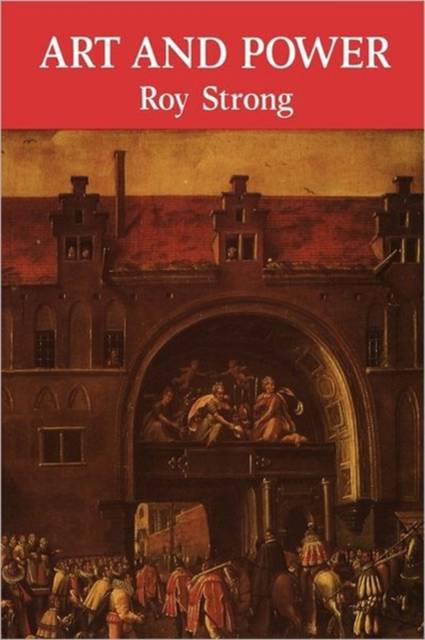
Art and PowerRenaissance Festivals, 1450-1650. The spectacular festivals mounted by the princes of the Renaissance period were both a remarkable marriage of the arts and a complex and subtle expression of political theory. The skills of musicians, composers and poets, dramatists, actors, dancers, painters, architects and engineers were needed to realise such events. They drew on the medieval tradition of state entries and tournaments, and merged this with the rediscovered half-imagined, half-historical world of antique festivals to produce an art-form of extraordinary refinement. From the Renaissance festival derive ballet, opera and even the proscenium-arch theatre of today; festivals are therefore a vital part of our cultural history, but their often arcane allusions and thought-processes make them difficult to appreciate. Roy Strong provides a sure and scholarly guide to their origins and raison d'etre in the first half of his book, and then goes on to study four case histories, the emperor Charles V, Catherine de' Medici in France, the grand duke Ferdinand in Tuscany, and finally the English court masque under Charles I. The themes which emerge are the use of festivals to unify diverse or divided dominions, as in the cases of the Holy Roman Empire and France, and their use as a means of glorifying rulers, whether a dynasty, as with the Medici in Florence, or an individual, as with Charles I. Within the political framework many of the greatest artists of the Renaissance can be found at work, from Leonardo da Vinci to Inigo Jones, from Brunelleschi to Rubens. SIR ROY STRONG was Director of the Victoria and Albert Museum from 1974 to 1987, prior to which he was Director of the National Portrait Gallery. His books on Elizabethan and Jacobean paintings are standard reference works, as is his work with Stephen Orgel on the court masques of Inigo Jones. He has, more recently, given great impetus to the study of garden history, through his lecturing, writing, and television presentations, which include
Spécifications
Parties prenantes
- Auteur(s) :
- Editeur:
Contenu
- Nombre de pages :
- 348
- Langue:
- Anglais
Caractéristiques
- EAN:
- 9780851152479
- Date de parution :
- 27-03-86
- Format:
- Livre broché
- Format numérique:
- Trade paperback (VS)
- Dimensions :
- 155 mm x 234 mm
- Poids :
- 498 g


Seulement chez Librairie Club
+ 125 points sur votre carte client de Librairie Club
Cadeau


Les avis
Nous publions uniquement les avis qui respectent les conditions requises. Consultez nos conditions pour les avis.