


- Retrait en 2 heures
- Assortiment impressionnant
- Paiement sécurisé
- Toujours un magasin près de chez vous
- Retrait en 2 heures
- Assortiment impressionnant
- Paiement sécurisé
- Toujours un magasin près de chez vous



45,95 €
+ 91 points
Format
Description
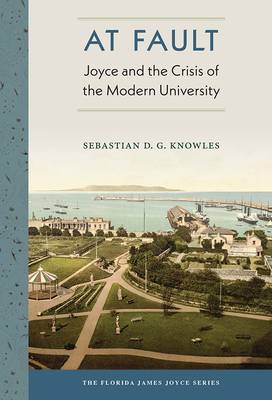
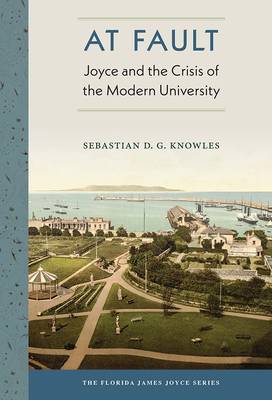
At Fault is an exhilarating celebration of risk-taking in the work of James Joyce. Esteemed Joyce scholar and teacher Sebastian Knowles critiques the state of the modern American university, denouncing what he sees as an accelerating trend of corporatization that is repressing discussions of controversial ideas and texts in the classroom. Arguing that Joyce offers the antidote to risk-averse attitudes in higher education, he shows how the modernist writer models an openness to being "at fault" that should be central to the academic enterprise. Knowles describes Joyce's writing style as an "outlaw language" imbued with the possibility and acknowledgment of failure. He demonstrates that Joyce's texts and characters display a drive to explore the boundaries of experience, to move outward in a centrifugal pattern, to defy delimitation. Knowles further highlights the expansiveness of Joyce's world by engaging a diverse range of topics, including Jumbo the elephant as a symbol of imperialism, the gramophone as a representation of the machine age, solfège and live music performance in the "Sirens" episode of Ulysses, Joyce's jokes and the neurology of humor, and inventive ways of reading and teaching Finnegans Wake. Contending that error is the central theme in all of Joyce's work, Knowles argues that the freedom to challenge boundaries and make mistakes is essential to an effective learning environment. Energetic and delightfully erudite, and offering insights drawn from over thirty years of classroom experience, Knowles inspires readers with the infinite possibilities of free human thought exemplified by Joyce's writing. A volume in the Florida James Joyce Series, edited by Sebastian D. G. Knowles
Spécifications
Parties prenantes
- Auteur(s) :
- Editeur:
Contenu
- Nombre de pages :
- 318
- Langue:
- Anglais
- Collection :
Caractéristiques
- EAN:
- 9780813068480
- Date de parution :
- 16-03-21
- Format:
- Livre broché
- Format numérique:
- Trade paperback (VS)
- Dimensions :
- 156 mm x 234 mm
- Poids :
- 494 g


Seulement chez Librairie Club
+ 91 points sur votre carte client de Librairie Club
Cadeau


Les avis
Nous publions uniquement les avis qui respectent les conditions requises. Consultez nos conditions pour les avis.