


- Retrait en 2 heures
- Assortiment impressionnant
- Paiement sécurisé
- Toujours un magasin près de chez vous
- Retrait en 2 heures
- Assortiment impressionnant
- Paiement sécurisé
- Toujours un magasin près de chez vous




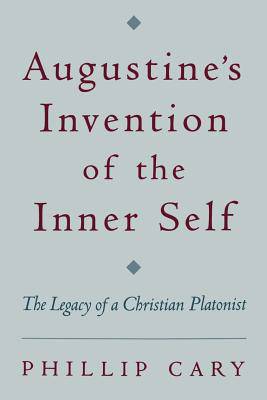
Augustine's Invention of the Inner Self
The Legacy of a Christian Platonist
Phillip Cary
Livre broché | Anglais
86,45 €
+ 172 points
Format
Description
In this book, Phillip Cary argues that Augustine invented the concept of the self as a private inner space-a space into which one can enter and in which one can find God. Although it has often been suggested that Augustine in some way inaugurated the Western tradition of inwardness, this is the first study to pinpoint what was new about Augustine's philosophy of inwardness and situate it within a narrative of his intellectual development and his relationship to the Platonist tradition.
Augustine invents the inner self, Cary argues, in order to solve a particular conceptual problem. Augustine is attracted to the Neoplatonist inward turn, which located God within the soul, yet remains loyal to the orthodox Catholic teaching that the soul is not divine. He combines the two emphases by urging us to turn "in then up"--to enter the inner world of the self before gazing at the divine Light above the human mind.
Cary situates Augustine's idea of the self historically in both the Platonist and the Christian traditions. The concept of private inner self, he shows, is a development within the history of the Platonist concept of intelligibility or intellectual vision, which establishes a kind of kinship between the human intellect and the divine things it sees. Though not the only Platonist in the Christian tradition, Augustine stands out for his devotion to this concept of intelligibility and his willingness to apply it even to God. This leads him to downplay the doctrine that God is incomprehensible, as he is convinced that it is natural for the mind's eye, when cleansed of sin, to see and understand God.
In describing Augustine's invention of the inner self, Cary's fascinating book sheds new light on Augustine's life and thought, and shows how Augustine's position developed into the more orthodox Augustine we know from his later writings.
Augustine invents the inner self, Cary argues, in order to solve a particular conceptual problem. Augustine is attracted to the Neoplatonist inward turn, which located God within the soul, yet remains loyal to the orthodox Catholic teaching that the soul is not divine. He combines the two emphases by urging us to turn "in then up"--to enter the inner world of the self before gazing at the divine Light above the human mind.
Cary situates Augustine's idea of the self historically in both the Platonist and the Christian traditions. The concept of private inner self, he shows, is a development within the history of the Platonist concept of intelligibility or intellectual vision, which establishes a kind of kinship between the human intellect and the divine things it sees. Though not the only Platonist in the Christian tradition, Augustine stands out for his devotion to this concept of intelligibility and his willingness to apply it even to God. This leads him to downplay the doctrine that God is incomprehensible, as he is convinced that it is natural for the mind's eye, when cleansed of sin, to see and understand God.
In describing Augustine's invention of the inner self, Cary's fascinating book sheds new light on Augustine's life and thought, and shows how Augustine's position developed into the more orthodox Augustine we know from his later writings.
Spécifications
Parties prenantes
- Auteur(s) :
- Editeur:
Contenu
- Nombre de pages :
- 232
- Langue:
- Anglais
Caractéristiques
- EAN:
- 9780195158618
- Date de parution :
- 03-04-03
- Format:
- Livre broché
- Format numérique:
- Trade paperback (VS)
- Dimensions :
- 153 mm x 233 mm
- Poids :
- 353 g


Seulement chez Librairie Club
+ 172 points sur votre carte client de Librairie Club
Cadeau


Les avis
Nous publions uniquement les avis qui respectent les conditions requises. Consultez nos conditions pour les avis.