


- Retrait en 2 heures
- Assortiment impressionnant
- Paiement sécurisé
- Toujours un magasin près de chez vous
- Retrait en 2 heures
- Assortiment impressionnant
- Paiement sécurisé
- Toujours un magasin près de chez vous




27,95 €
+ 55 points
Description
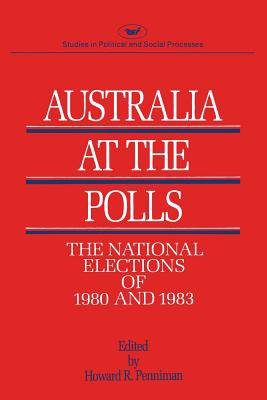
Howard R. Penniman's election studies command the respect of political commentators and election watchers as the authoritative coverage of democratic elections throughout the world. This is the third analysis of Australian national elections; the first of those elections changed in the press from a "dull campaign" into a "cliffhanger" during the last two weeks of the campaign, the second resulted in a landslide victory due in no small part to a man who gained the leadership of his party only weeks before the election. David Butler, one of the world's most experienced election-watchers, concludes in his introduction that the election campaign of 1980 was generally a fair one, and the campaigns of the individual parties are put under the microscope in later chapters by Martin Rawlinson on the Liberal Party, Patrick Weller on the ALP and Keith Richmond on the National Country Party. John Warhurst examines the role and the fortunes of minor parties, Murray Goot analyses the media and the polls, Anne Summers looks at the influence of women as campaigners and women as voters, Don Aitkin explores changes in the nature and structure of the Australian electorate and Colin Hughes summarizes and draws a number of conclusions from "a close-run thing." In the final section of the book Patrick Weller analyses the dramatic events surrounding the calling of an early action and the simultaneous replacement of Bill Hayden by Bob Hawke as ALP leader on 3 February 1983 and examines the strengths and weaknesses of the parties during the campaign. Colin Hughes conducts a post-mortem on the 1983 election and provides a succinct summary of the basic lessons to be learnt. Like its predecessors, Australia at the Polls combines scholarship with commentary, providing the full analysis and data which make it indispensable to the specialist without lapsing into technical language and terminology. Students of politics and interested election watchers will accordingly find it a fascinating fund of information, while for professionals, be they politicians, journalists or academics, it will be an essential working tool.
Spécifications
Parties prenantes
- Auteur(s) :
- Editeur:
Contenu
- Langue:
- Anglais
- Collection :
Caractéristiques
- EAN:
- 9780844735061
- Date de parution :
- 01-01-83
- Format:
- Livre broché
- Format numérique:
- Trade paperback (VS)
- Dimensions :
- 152 mm x 229 mm
- Poids :
- 485 g


Seulement chez Librairie Club
+ 55 points sur votre carte client de Librairie Club
Cadeau


Les avis
Nous publions uniquement les avis qui respectent les conditions requises. Consultez nos conditions pour les avis.