


- Retrait en 2 heures
- Assortiment impressionnant
- Paiement sécurisé
- Toujours un magasin près de chez vous
- Retrait en 2 heures
- Assortiment impressionnant
- Paiement sécurisé
- Toujours un magasin près de chez vous



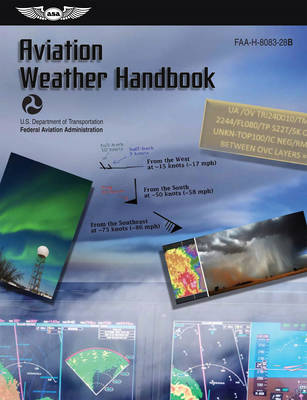
Aviation Weather Handbook (2026)
Faa-H-8083-28b
Federal Aviation Administration (FAA), U S Department of Transportation
69,45 €
+ 138 points
Format
Description
This is not AI-generated content. Aviation Supplies & Academics has been the industry's trusted source for official FAA publications for more than 85 years. Look for the ASA wings to ensure you are purchasing the latest authentic FAA release.
This important Federal Aviation Administration (FAA) Handbook updates and consolidates information previously available in six different Advisory Circulars:
This important Federal Aviation Administration (FAA) Handbook updates and consolidates information previously available in six different Advisory Circulars:
- AC 00-6, Aviation Weather
- AC 00-24, Thunderstorms
- AC 00-30, Clear Air Turbulence Avoidance
- AC 00-45, Aviation Weather Services
- AC 00-54, Pilot Windshear Guide
- AC 00-57, Hazardous Mountain Winds
Pilots and dispatchers must understand all aspects of weather. The ability to appreciate good weather, recognize and respect marginal or hazardous weather, and avoid violent weather as well as make sound weather decisions is critical for successful outcomes of all flights. This book examines each aspect of weather as it relates to aircraft operation and flight safety and introduces the tools available for flight planning and inflight weather decisions, including observations, analyses, and forecasts.
This updated edition reflects key changes for today's pilots with improved accuracy, modernized terminology, and updated weather products. Coverage is expanded to include enhancements to aviation weather services and global forecasting tools, updates to turbulence and forecast products (including GTG-N and NDFD), and alignment with current National Weather Service guidance. New content is added on icing, radar interpretation (including chaff), and space weather, while outdated tools are replaced with modern resources, such as the Graphical Forecast for Aviation (GFA), giving pilots access to the most relevant, real-world weather information available today.
The information in this handbook applies to students, experienced pilots, and flight instructors alike and offers a key reference for meteorology and weather services applicable to FAA Knowledge Tests and airman certification. This comprehensive weather resource addresses flight safety in both visual (VMC) and instrument (IMC) meteorological conditions. Subjects covered also include meteorology; mountain, tropical, and arctic weather; observations (ASOS, AWOS, METAR, PIREP, radar); advisories (including AIRMET, SIGMET, wind shear); forecasts (TAF, FA); and much more.
Examples and explanations are supported with online references for further weather resources, definitions, and related FAA publications along with detailed, full-color drawings and photographs throughout.
Important note from the publisher:
While AI-generated content can be helpful to identify resources for ongoing study, it is not a reliable resource for learning critical, safety-dependent topics such as aviation. AI content is sterile, often lacks important context, and is at risk of errors. ASA publishes only human-generated content to ensure it is accurate, reliable, comprehensive, and presented in context--so you can become a safe and effective aviator.
Spécifications
Parties prenantes
- Auteur(s) :
- Editeur:
Contenu
- Nombre de pages :
- 536
- Langue:
- Anglais
- Collection :
Caractéristiques
- EAN:
- 9781644256022
- Date de parution :
- 02-06-26
- Format:
- Livre broché
- Format numérique:
- Trade paperback (VS)
- Dimensions :
- 210 mm x 273 mm


Seulement chez Librairie Club
+ 138 points sur votre carte client de Librairie Club
Cadeau


Les avis
Nous publions uniquement les avis qui respectent les conditions requises. Consultez nos conditions pour les avis.