


- Retrait en 2 heures
- Assortiment impressionnant
- Paiement sécurisé
- Toujours un magasin près de chez vous
- Retrait en 2 heures
- Assortiment impressionnant
- Paiement sécurisé
- Toujours un magasin près de chez vous



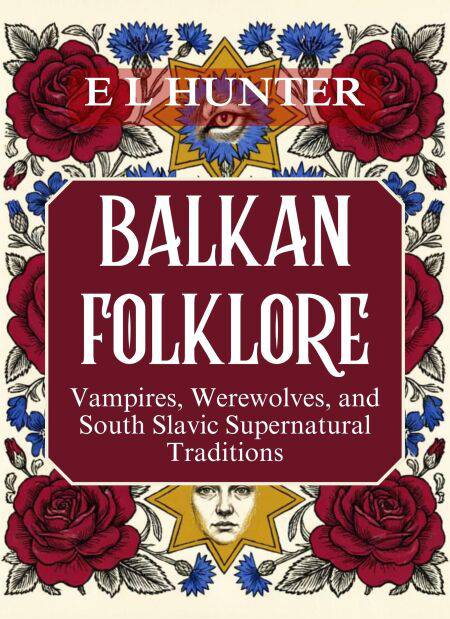
Balkan Folklore: Vampires, Werewolves, and South Slavic Supernatural Traditions EBOOK
E L Hunter
Ebook | Anglais
8,99 €
+ 8 points
Description
In 2004, in a Romanian village called Marotinu de Sus, a family dug up their dead brother-in-law, cut out his heart, and burned it on a fire by the road. They were not mad. They were not isolated. They were doing what their grandmothers had done — what villages across the Balkans had been doing for five hundred years and longer, in a tradition that runs from the Roman frontier into the present without breaking.
This is the dark folklore of the Balkans. Not the Stoker version. Not the Hollywood version. The strigoi who returns to drink from the family well. The kukeri who walk the snow at midwinter in bells and animal skins to drive the dead year out of the houses. The vila who calls a young man to the mountain spring and is not seen again. The bajalica who pours molten lead over a basin of water above a sick child's head and reads in the cooling shapes which neighbour has set the evil eye.
These are not metaphors. They are practice. In some villages they are still happening — attenuated, half-believed, half-performed, half-remembered, and entirely real.
A region that has never quite stopped negotiating with its dead.
Spécifications
Parties prenantes
- Auteur(s) :
- Editeur:
Contenu
- Langue:
- Anglais
Caractéristiques
- EAN:
- 9798235912038
- Date de parution :
- 18-05-26
- Format:
- Ebook
- Protection digitale:
- /
- Format numérique:
- ePub


Seulement chez Librairie Club
+ 8 points sur votre carte client de Librairie Club
Cadeau


Les avis
Nous publions uniquement les avis qui respectent les conditions requises. Consultez nos conditions pour les avis.