

- Retrait en 2 heures
- Assortiment impressionnant
- Paiement sécurisé
- Toujours un magasin près de chez vous
- Retrait en 2 heures
- Assortiment impressionnant
- Paiement sécurisé
- Toujours un magasin près de chez vous



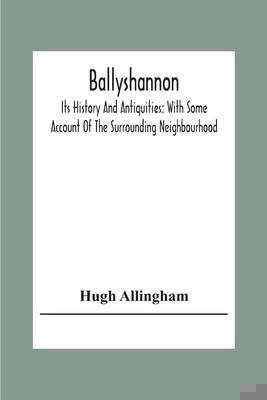
Ballyshannon
Its History And Antiquities: With Some Account Of The Surrounding Neighbourhood
Hugh Allingham
Livre broché | Anglais
11,95 €
+ 23 points
Passer une commande en un clic
Payer en toute sécurité


Livraison en Belgique: 3,99 €
Livraison en magasin gratuite
Description
Ballyshannon emerges from the past in language both exact and affectionate. History and place come alive. A nineteenth-century account rooted in victorian era ireland, Hugh Allingham's Ballyshannon: Its History and Antiquities presents a close, observant record of the town and its neighbourhood, pairing antiquarian inquiry with readable prose. It functions as an irish local history book and a practical irish antiquities guide, pointing readers toward ballyshannon historical sites and the wider county donegal heritage, and it remains a noteworthy example of historical nonfiction ireland. As a work of its time, it exemplifies antiquarian studies ireland and offers contemporary students of place a frank window into nineteenth century donegal life and memory. Allingham writes with the steady eye of a careful antiquary, attentive to landscape, family association and surviving material traces; the book reads as both narrative and archive, rewarding close reading and casual perusal alike. Valuable to casual walkers and to serious researchers alike, the volume serves as a local historians reference and supports genealogy research ireland by preserving place-names, family associations and parish detail that often vanish from later records. Its tone, observant, sometimes speculative, and rooted in local testimony, gives it lasting literary and historical significance: the book records how Victorian scholars approached place and past, and it remains relevant for irish history enthusiasts. For local societies, archivists and independent researchers, the book offers verifiable glimpses of social geography that can complement surviving official records. Republished by Alpha Editions in a careful modern edition, this volume preserves the spirit of the original while making it effortless to enjoy today - a heritage title prepared for readers and collectors alike. Perfect for casual readers and classic-literature collectors, it also serves as an evocative county donegal travel companion for anyone drawn to the Erne valley and the region's enduring stories.
Spécifications
Parties prenantes
- Auteur(s) :
- Editeur:
Contenu
- Nombre de pages :
- 152
- Langue:
- Anglais
Caractéristiques
- EAN:
- 9789354304309
- Date de parution :
- 15-12-20
- Format:
- Livre broché
- Format numérique:
- Trade paperback (VS)
- Dimensions :
- 152 mm x 229 mm
- Poids :
- 231 g


Seulement chez Librairie Club
+ 23 points sur votre carte client de Librairie Club
Cadeau

Cadeau


Les avis
Nous publions uniquement les avis qui respectent les conditions requises. Consultez nos conditions pour les avis.