


- Retrait en 2 heures
- Assortiment impressionnant
- Paiement sécurisé
- Toujours un magasin près de chez vous
- Retrait gratuit dans votre magasin Club
- 7.000.0000 titres dans notre catalogue
- Payer en toute sécurité
- Toujours un magasin près de chez vous



Description
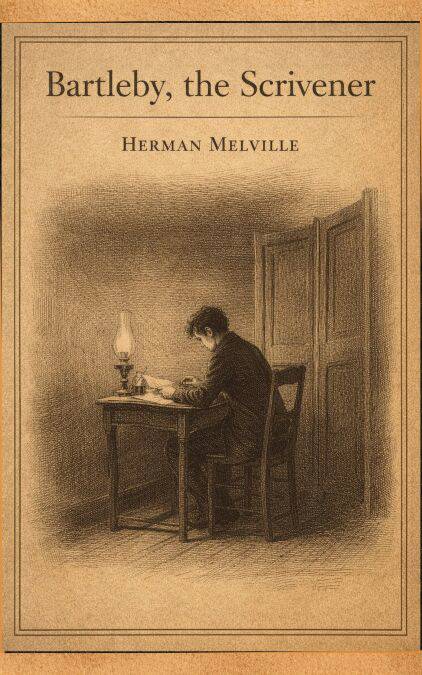
Bartleby, the Scrivener by Herman Melville is a profound and haunting novella that explores isolation, passive resistance, and the quiet unraveling of the human spirit within the rigid structures of modern society. First published in 1853, this compelling work departs from Melville's seafaring adventures and instead ventures into the confined world of a Wall Street law office—where the greatest drama unfolds not through action, but through refusal.
Narrated by an unnamed, mild-mannered lawyer, the story introduces Bartleby, a newly hired copyist whose calm demeanor and diligent work initially impress his employer. However, when asked to perform routine tasks, Bartleby responds with the now-famous phrase: "I would prefer not to." This simple, polite refusal becomes the center of the narrative, quietly challenging authority, expectation, and the very foundations of productivity and compliance.
As Bartleby's refusals multiply, the lawyer struggles to understand him. Is Bartleby rebellious, ill, lazy, or profoundly misunderstood? Rather than confronting him directly, the lawyer oscillates between frustration, pity, and moral reflection. The office environment—populated by eccentric clerks with their own quirks and limitations—becomes a microcosm of a bureaucratic society that values efficiency over empathy.
Melville masterfully builds tension through stillness and silence. Bartleby's passive resistance is neither loud nor violent, yet it destabilizes everything around him. His quiet withdrawal from work, society, and eventually life itself raises unsettling questions about free will, alienation, and the cost of modern industrial life. Through subtle irony and understated humor, Melville critiques the dehumanizing forces of capitalism and the isolating effects of urban existence.
At its heart, Bartleby, the Scrivener is a meditation on compassion and its limits. The lawyer's attempts to help Bartleby reveal both the depth of his humanity and the boundaries of his understanding. The story's haunting conclusion lingers long after the final page, leaving readers to grapple with themes of loneliness, existential despair, and the quiet tragedy of a man who simply "prefers not to."
A cornerstone of American literature, this novella remains strikingly relevant in its exploration of individual resistance within impersonal systems. Thought-provoking, enigmatic, and deeply moving, Bartleby, the Scrivener stands as one of Herman Melville's most enduring and psychologically complex works.
Narrated by an unnamed, mild-mannered lawyer, the story introduces Bartleby, a newly hired copyist whose calm demeanor and diligent work initially impress his employer. However, when asked to perform routine tasks, Bartleby responds with the now-famous phrase: "I would prefer not to." This simple, polite refusal becomes the center of the narrative, quietly challenging authority, expectation, and the very foundations of productivity and compliance.
As Bartleby's refusals multiply, the lawyer struggles to understand him. Is Bartleby rebellious, ill, lazy, or profoundly misunderstood? Rather than confronting him directly, the lawyer oscillates between frustration, pity, and moral reflection. The office environment—populated by eccentric clerks with their own quirks and limitations—becomes a microcosm of a bureaucratic society that values efficiency over empathy.
Melville masterfully builds tension through stillness and silence. Bartleby's passive resistance is neither loud nor violent, yet it destabilizes everything around him. His quiet withdrawal from work, society, and eventually life itself raises unsettling questions about free will, alienation, and the cost of modern industrial life. Through subtle irony and understated humor, Melville critiques the dehumanizing forces of capitalism and the isolating effects of urban existence.
At its heart, Bartleby, the Scrivener is a meditation on compassion and its limits. The lawyer's attempts to help Bartleby reveal both the depth of his humanity and the boundaries of his understanding. The story's haunting conclusion lingers long after the final page, leaving readers to grapple with themes of loneliness, existential despair, and the quiet tragedy of a man who simply "prefers not to."
A cornerstone of American literature, this novella remains strikingly relevant in its exploration of individual resistance within impersonal systems. Thought-provoking, enigmatic, and deeply moving, Bartleby, the Scrivener stands as one of Herman Melville's most enduring and psychologically complex works.
Spécifications
Parties prenantes
- Auteur(s) :
- Editeur:
Contenu
- Nombre de pages :
- 51
- Langue:
- Anglais
Caractéristiques
- EAN:
- 9784781871851
- Date de parution :
- 23-02-26
- Format:
- Ebook
- Protection digitale:
- Digital watermarking
- Format numérique:
- ePub


Seulement chez Librairie Club
Cadeau

Cadeau


Les avis
Nous publions uniquement les avis qui respectent les conditions requises. Consultez nos conditions pour les avis.