


- Retrait en 2 heures
- Assortiment impressionnant
- Paiement sécurisé
- Toujours un magasin près de chez vous
- Retrait en 2 heures
- Assortiment impressionnant
- Paiement sécurisé
- Toujours un magasin près de chez vous



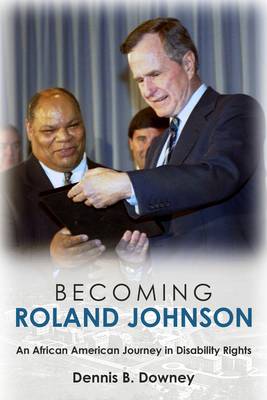
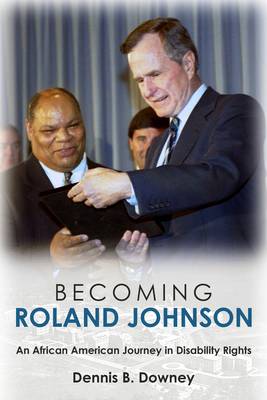
Becoming Roland Johnson
An African American Journey in Disability Rights
Dennis B Downey
Livre broché | Anglais
23,95 €
+ 47 points
Description
Roland Johnson (1945-1994) grew up in a large African American working-class family in Philadelphia, Pennsylvania. As he grew up, he developed a range of worrisome personal behaviors, included self-injury, aggression toward others, overeating, and a willful defiance of authority. Local school officials determined that Roland's unwillingness or inability to master the basics of education made him ineligible to attend public school, something Pennsylvania law permitted. Uncertain of what to do, Roland's parents took him to several physicians and clinicians, who concluded he was, in Roland's own words, a "mental retard." Today we would say Roland had an intellectual and developmental disability.
These same specialists recommended he be placed at the Pennhurst State School, one of nearly 300 institutions dedicated to the coerced confinement of children and adults with a mental disability, where residents were wards of the state with no constitutional protections. Inspired by the American eugenics movement, which had a strong presence in Philadelphia, institutions for so-called "mental defectives" were sites for forced sterilization, medical experimentation, and government supported research. Roland entered Pennhurst in 1958, and except for several brief and unsuccessful home visits, he remained there until his official release in 1973. Pennhurst was a massive institution rife with overcrowding, an inadequate and poorly trained staff, and plagued by physical, sexual and psychological violence directed at the weak and most vulnerable "inmates."
Ironically, it was during Roland's Pennhurst years that a grass roots disability rights movement took shape in Philadelphia and across the country. Roland would become the beneficiary, and eventually a leader, in the campaign to close institutions and extend the rights of equal citizenship to people with a physical or cognitive disability. So great was his stature that he befriended President George H. W. Bush and received an invitation to attend the July 1990 signing of the Americans with Disability Act in the White House Rose Garden. A leading public speaker and self-advocate for people with an intellectual or developmental disability, Roland's influence became so great that colleagues referred to him as the Martin Luther King, Jr. of disability rights. Late in life, Roland shared with audiences that he had been diagnosed with HIV/AIDS, and he expanded his public advocacy to include this group of marginalized citizens. Following his death in 1994, friends created a memorial patch that is now included in the National AIDS Memorial Quilt.
This is the story of Roland Johnson's life, and his improbable rise as a leader for disability rights in modern America. His presence as a self-advocate in Philadelphia and throughout the Commonwealth was unrivaled. Roland Johnson overcame oppression and prejudice, demonstrating a remarkable resilience in the face of inhumane treatment. Once an outcast, Roland grew into a much sought after speaker who helped shape public policy at the state and federal level.
These same specialists recommended he be placed at the Pennhurst State School, one of nearly 300 institutions dedicated to the coerced confinement of children and adults with a mental disability, where residents were wards of the state with no constitutional protections. Inspired by the American eugenics movement, which had a strong presence in Philadelphia, institutions for so-called "mental defectives" were sites for forced sterilization, medical experimentation, and government supported research. Roland entered Pennhurst in 1958, and except for several brief and unsuccessful home visits, he remained there until his official release in 1973. Pennhurst was a massive institution rife with overcrowding, an inadequate and poorly trained staff, and plagued by physical, sexual and psychological violence directed at the weak and most vulnerable "inmates."
Ironically, it was during Roland's Pennhurst years that a grass roots disability rights movement took shape in Philadelphia and across the country. Roland would become the beneficiary, and eventually a leader, in the campaign to close institutions and extend the rights of equal citizenship to people with a physical or cognitive disability. So great was his stature that he befriended President George H. W. Bush and received an invitation to attend the July 1990 signing of the Americans with Disability Act in the White House Rose Garden. A leading public speaker and self-advocate for people with an intellectual or developmental disability, Roland's influence became so great that colleagues referred to him as the Martin Luther King, Jr. of disability rights. Late in life, Roland shared with audiences that he had been diagnosed with HIV/AIDS, and he expanded his public advocacy to include this group of marginalized citizens. Following his death in 1994, friends created a memorial patch that is now included in the National AIDS Memorial Quilt.
This is the story of Roland Johnson's life, and his improbable rise as a leader for disability rights in modern America. His presence as a self-advocate in Philadelphia and throughout the Commonwealth was unrivaled. Roland Johnson overcame oppression and prejudice, demonstrating a remarkable resilience in the face of inhumane treatment. Once an outcast, Roland grew into a much sought after speaker who helped shape public policy at the state and federal level.
Spécifications
Parties prenantes
- Auteur(s) :
- Editeur:
Contenu
- Nombre de pages :
- 160
- Langue:
- Anglais
Caractéristiques
- EAN:
- 9781955041560
- Date de parution :
- 01-08-26
- Format:
- Livre broché
- Format numérique:
- Trade paperback (VS)
- Dimensions :
- 152 mm x 229 mm


Seulement chez Librairie Club
+ 47 points sur votre carte client de Librairie Club
Cadeau


Les avis
Nous publions uniquement les avis qui respectent les conditions requises. Consultez nos conditions pour les avis.