


- Retrait en 2 heures
- Assortiment impressionnant
- Paiement sécurisé
- Toujours un magasin près de chez vous
- Retrait gratuit dans votre magasin Club
- 7.000.0000 titres dans notre catalogue
- Payer en toute sécurité
- Toujours un magasin près de chez vous



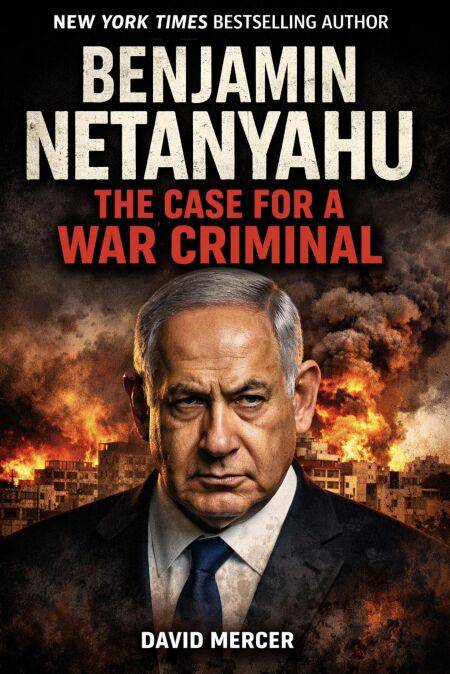
Description
Benjamin Netanyahu: The Case for a War Criminal is a rigorous, uncompromising examination of power, violence, and impunity in the modern world. Written with legal precision and moral clarity, the book asks a question many avoid but international law demands: when does state violence cross from policy into crime—and who bears responsibility when it does?
At the centre of this inquiry is Benjamin Netanyahu, the dominant political figure of Israel's last generation. Across decades of leadership, Netanyahu has overseen repeated military operations in Gaza, a prolonged blockade that has shaped every aspect of civilian life, and a political strategy that treats perpetual conflict as governance. This book argues that these are not isolated decisions or tragic miscalculations, but elements of a coherent system—one that normalises civilian harm, erodes legal restraint, and survives through international protection.
Moving chapter by chapter, the book dismantles the myths that shield power from accountability. It explains international humanitarian law in clear, accessible terms, then applies it directly to documented practices: collective punishment, indiscriminate and disproportionate attacks, forced displacement, and the deliberate creation of unlivable conditions. It examines command responsibility, exposing why leaders cannot hide behind institutions or generals. It confronts the most difficult questions—crimes against humanity and genocide—not rhetorically, but legally, weighing intent through policy, pattern, and consequence.
What sets this book apart is its refusal to abstract suffering. Alongside legal analysis, it centres voices from Gaza—survivors, children, medical workers—whose testimonies reveal what policy means when translated into daily life. Homes erased. Childhoods interrupted. Trauma layered across generations. These voices are not used for sentiment, but for evidence, grounding law in lived reality.
The book also turns the lens outward. It details how Western governments provide diplomatic, military, and legal cover; how media language launders violence into inevitability; how accusations of antisemitism are weaponised to smear accusers; and how selective justice corrodes the credibility of international law itself. The result is a portrait of impunity operating openly—protected by allies, normalised by narrative, and insulated from consequence.
This is not a partisan polemic. It is a case, built carefully and sourced extensively, that insists law must mean what it says. It does not deny security concerns or minimise crimes committed by others. It asks a narrower, more demanding question: whether legality applies equally when power is aligned, and whether civilians retain protection when fear becomes policy.
As legal accountability is delayed and courts are pressured, the book ends where judgment cannot be vetoed—history. Evidence accumulates. Memory persists. Records endure. Benjamin Netanyahu: The Case for a War Criminal is written for readers who refuse to confuse repetition with inevitability, power with permission, or delay with innocence. It is a necessary book for anyone seeking to understand Gaza, international law, and the price of impunity in a world that claims to be governed by rules.
Spécifications
Parties prenantes
- Auteur(s) :
- Editeur:
Contenu
- Langue:
- Anglais
Caractéristiques
- EAN:
- 9798233685514
- Date de parution :
- 10-01-26
- Format:
- Ebook
- Protection digitale:
- /
- Format numérique:
- ePub



Seulement chez Librairie Club
+ 6 points sur votre carte client de Librairie Club

Les avis
Nous publions uniquement les avis qui respectent les conditions requises. Consultez nos conditions pour les avis.