


- Retrait en 2 heures
- Assortiment impressionnant
- Paiement sécurisé
- Toujours un magasin près de chez vous
- Retrait en 2 heures
- Assortiment impressionnant
- Paiement sécurisé
- Toujours un magasin près de chez vous



108,45 €
+ 216 points
Description
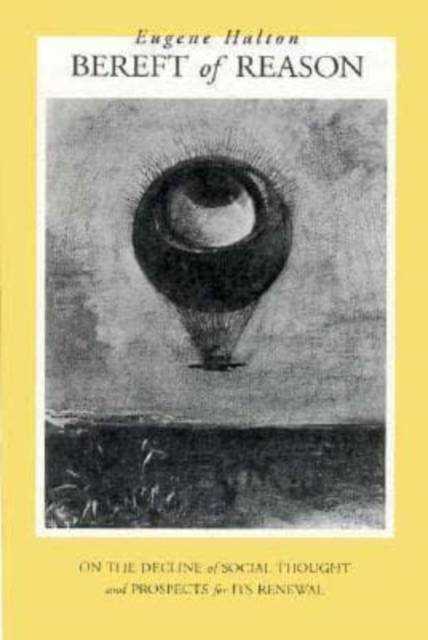
In this radical critique of contemporary social theory, Eugene Halton argues that both modernism and postmodernism are damaged philosophies whose acceptance of the myths of the mind/body dichotomy make them incapable of solving our social dilemmas. Claiming that human beings should be understood as far more than simply a form of knowledge, social construction, or contingent difference, Halton argues that contemporary thought has lost touch with the spontaneous passions--or enchantment--of life. Exploring neglected works in twentieth century social thought and philosophy--particularly the writings of Lewis Mumford and Charles Peirce--as well as the work of contemporary writers such as Vaclav Havel, Maya Angelou, Milan Kundera, Doris Lessing, and Victor Turner, Halton argues that reason is dependent upon nonrational forces--including sentiment, instinct, conjecture, imagination, and experience. We must, he argues, frame our questions in a way which encompasses both enchantment and critical reason, and he offers an outline here for doing so. A passionate plea for a fundamental reexamination of the entrenched assumptions of the modern era, this book deals with issues of vital concern to modern societies and should be read by scholars across disciplines. "Bereft of Reason is a thoughtful critique informed by a passionate commitment to the renewal of critical concerns. For this reason alone it should be widely read and inform current debates."--Lauren Langman, Sociological Inquiry "Halton takes the 'ghost in the machine' as a dominant defining metaphor for modern thought and life, and criticizes it with gusto, wit, wide reading, and philosophical acumen."--Robert J. Mulvaney, Review of Metaphysics
Spécifications
Parties prenantes
- Auteur(s) :
- Editeur:
Contenu
- Nombre de pages :
- 314
- Langue:
- Anglais
- Collection :
Caractéristiques
- EAN:
- 9780226314617
- Date de parution :
- 15-04-95
- Format:
- Livre relié
- Format numérique:
- Genaaid
- Dimensions :
- 160 mm x 235 mm
- Poids :
- 548 g



Seulement chez Librairie Club
+ 216 points sur votre carte client de Librairie Club
Cadeau


Les avis
Nous publions uniquement les avis qui respectent les conditions requises. Consultez nos conditions pour les avis.