


- Retrait en 2 heures
- Assortiment impressionnant
- Paiement sécurisé
- Toujours un magasin près de chez vous
- Retrait en 2 heures
- Assortiment impressionnant
- Paiement sécurisé
- Toujours un magasin près de chez vous



110,45 €
+ 220 points
Description
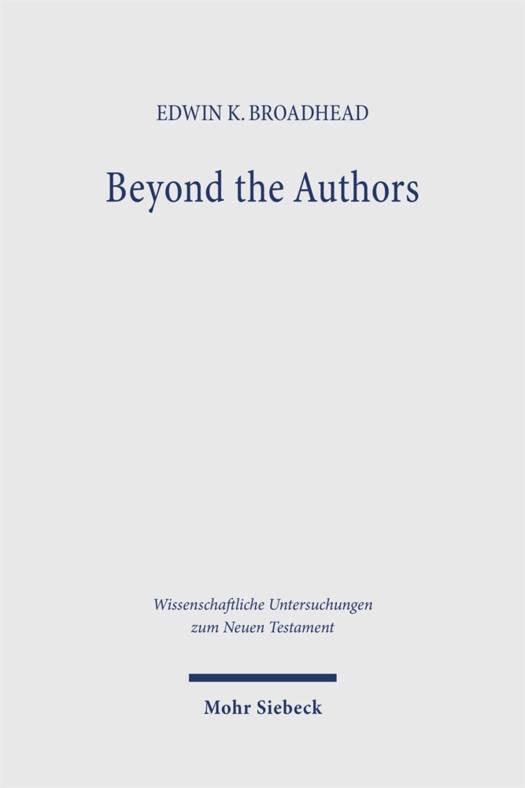
Edwin K. Broadhead challenges the traditional assumption that the meaning and identity of New Testament texts rest in the intentions of an author expressed in a foundational narrative fixed in writing. He argues that for ancient literature the decisive factor is the viability and variability of a text's tradition history, encompassing composition, preservation, transmission, editing, interpretation, memory, and performance. These developments draw intermittently and interchangeably upon oral, scribal, memorial, and performative modes and respond to the needs of communities of tradents. The author maintains that the writings of the followers of Jesus belong to this ancient, normative way of Traditionshandlung and Traditionsverhalten, making it unlikely that these writings provide unmediated access to intentions of an author.
Employing a formalistic analysis set within a history of traditions context, the author seeks to move beyond the myopic focus on written manuscript and the attachment to the image of the New Testament author as a consistent theologian and literary genius. This renewed attention to Traditionshandlung in wider literature highlights two key traits of the New Testament material. First, the New Testament appears as a collection of traditions in a wide variety of forms: oral traditions such as hymn, story, preaching, prayer; performed traditions such as worship, eucharist, baptism, blessings; and iconic traditions such as sign, symbol, icon. Secondly, because these writings were shaped over time within communities of believers and developed across generations for changing contexts, they come to us as living traditions. This metabolic quality becomes fully visible only when we look beyond the authors - beyond the vision of a personal and punctiliar production of unchanging texts.
Spécifications
Parties prenantes
- Auteur(s) :
- Editeur:
Contenu
- Nombre de pages :
- 270
- Langue:
- Anglais
- Collection :
Caractéristiques
- EAN:
- 9783161640155
- Date de parution :
- 31-07-26
- Format:
- Livre relié
- Dimensions :
- 155 mm x 232 mm


Seulement chez Librairie Club
+ 220 points sur votre carte client de Librairie Club
Cadeau


Les avis
Nous publions uniquement les avis qui respectent les conditions requises. Consultez nos conditions pour les avis.