


- Retrait en 2 heures
- Assortiment impressionnant
- Paiement sécurisé
- Toujours un magasin près de chez vous
- Retrait gratuit dans votre magasin Club
- 7.000.0000 titres dans notre catalogue
- Payer en toute sécurité
- Toujours un magasin près de chez vous



Description
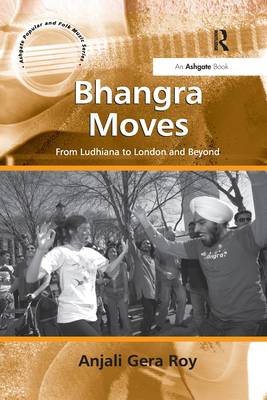
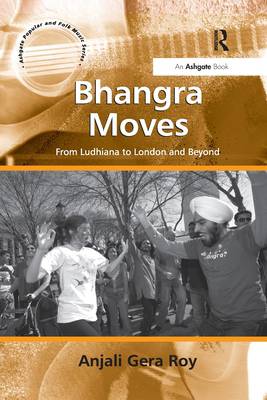
Bhangra is commonly understood as the hybrid music produced in Britain by British Asian music producers through mixing Panjabi folk melodies with western pop and black dance rhythms. This is derived from a Punjabi harvest dance of the same name. This book looks at Bhangra's global flows from one of its originary sites, the Indian subcontinent, to contribute to the understanding of emerging South Asian cultural practices such as Bhangra or Bollywood in multi-ethnic societies. It seeks to trace Bhangra's moves from Punjab and its 'return back' to look at the forces that initiate and regulate global flows of local texts and to ask how their producers and consumers redirect them to produce new definitions of culture, identity and nation. The critical importance of this book lies in understanding the difference between the present globalizing wave and previous trans-local movements. Gera Roy contrasts the frames of cultural imperialism with those of cultural invasion to show how Indian cultures have constantly reinvented themselves by cross-pollinating with 'invading' cultures such as Hellenic, Persian, Arabic and many others in the past. By looking at Bhangra's flows to and from India, the book revises the relation between culture, space and identity and challenges boundaries. It weighs both the uses and costs of visibility provided by global networks to marginalized groups in diverse localities and explores whether collaborations between Bhangra practitioners, largely of working class origin, give ordinary people any control over the circulation of culture in the global village. Finally, the book considers whether cultural practices can alter hierarchies and power structures in the real world.
Spécifications
Parties prenantes
- Auteur(s) :
- Editeur:
Contenu
- Nombre de pages :
- 304
- Langue:
- Anglais
- Collection :
Caractéristiques
- EAN:
- 9781138255579
- Date de parution :
- 11-11-16
- Format:
- Livre broché
- Format numérique:
- Trade paperback (VS)
- Dimensions :
- 154 mm x 248 mm
- Poids :
- 453 g


Seulement chez Librairie Club
+ 228 points sur votre carte client de Librairie Club

Les avis
Nous publions uniquement les avis qui respectent les conditions requises. Consultez nos conditions pour les avis.