


- Retrait en 2 heures
- Assortiment impressionnant
- Paiement sécurisé
- Toujours un magasin près de chez vous
- Retrait gratuit dans votre magasin Club
- 7.000.0000 titres dans notre catalogue
- Payer en toute sécurité
- Toujours un magasin près de chez vous



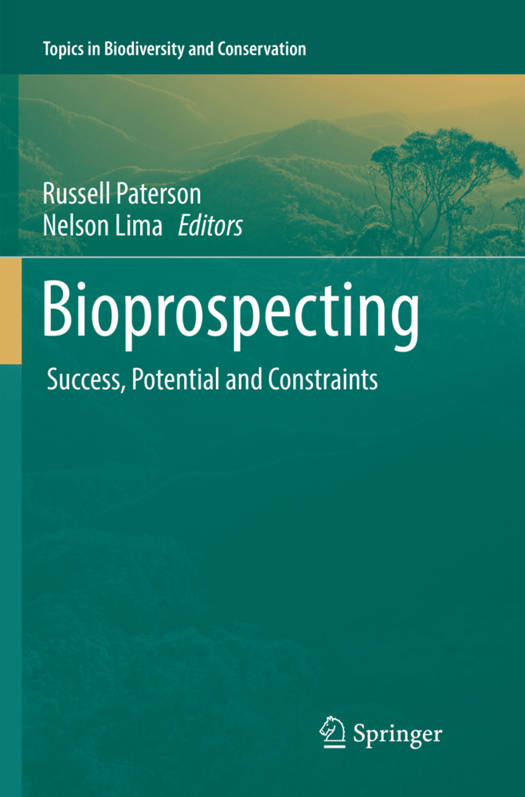
Bioprospecting
Success, Potential and Constraints
208,45 €
+ 416 points
Description
This book considers all aspects of bioprospecting in 14 succinct chapters and a forward by David Hawksworth. The organisms addressed include plants, insects, fungi, bacteria and phages. Bioprospecting has never been more relevant and is of renewed interest, because of the extremely worrying rise in novel, resistant pathogenic microorganisms. The practices in pharmaceutical companies have failed to deliver novel antibiotics to control these infections. We need to look for new sources of drugs from the environment on a massive scale as drug discovery is "too important to fail". Furthermore, the field can add great value to ecosystems in terms of economics, while providing additional reasons for maintaining associated services, such as food provision, benign climate, effective nutrient cycling and cultural practices. Bioprospecting provides another reason why climate change must be reduced in order to preserve relevant environments. Previous bioprospecting projects should be re-visited and established biodiversity centres have a major role. Many different ecosystems exist which contain unique organisms with the potential to supply novel antibiotics, enzymes, food, and cosmetics, or they may simply have aesthetic value. The book stresses the difficulties in obtaining successful products and yet describes why natural products should be investigated over combinatorial chemistry. Personal experience of bioprospecting projects are given significance. Issues such as how to share the benefits equitably with local communities are described and why pharmaceutical companies can be reluctant to be involved. Legal issues are discussed. Finally, there has never been a better time for a new book on bioprospecting, because of the need to preserve ecosystems, and from the emergence of resistant pathogenic microorganisms.
Spécifications
Parties prenantes
- Editeur:
Contenu
- Nombre de pages :
- 303
- Langue:
- Anglais
- Collection :
- Tome:
- n° 16
Caractéristiques
- EAN:
- 9783319838632
- Date de parution :
- 30-04-18
- Format:
- Livre broché
- Dimensions :
- 155 mm x 14 mm
- Poids :
- 539 g

Seulement chez Librairie Club
+ 416 points sur votre carte client de Librairie Club

Les avis
Nous publions uniquement les avis qui respectent les conditions requises. Consultez nos conditions pour les avis.