


- Retrait en 2 heures
- Assortiment impressionnant
- Paiement sécurisé
- Toujours un magasin près de chez vous
- Retrait en 2 heures
- Assortiment impressionnant
- Paiement sécurisé
- Toujours un magasin près de chez vous



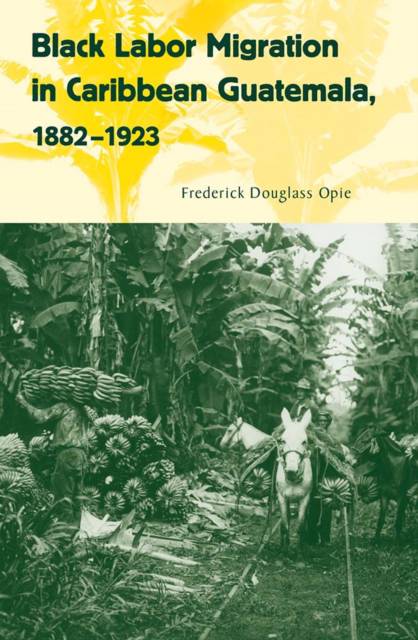
Black Labor Migration in Caribbean Guatemala, 1882-1923
Frederick Douglass Opie
30,45 €
+ 60 points
Description
"A significant contribution that enriches historical narratives. This is a wonderful case study that complicates Latin American history, and particularly labor history in that region, by emphasizing the positive role played by black migrants in labor mobilization in Guatemala."--Jean Muteba Rahier, Florida International University In the late nineteenth century, many Central American governments and countries sought to fill low-paying jobs and develop their economies by recruiting black American and West Indian laborers. Frederick Opie offers a revisionist interpretation of these workers, who were often depicted as simple victims with little, if any, enduring legacy. The Guatemalan government sought to build an extensive railroad system in the 1880s, and actively recruited foreign labor. For poor workers of African descent, immigrating to Guatemala was seen as an opportunity to improve their lives and escape from the racism of the Jim Crow U.S. South and the French and British colonial Caribbean. Using primary and secondary sources as well as ethnographic data, Opie details the struggles of these workers who were ultimately inspired to organize by the ideas of Marcus Garvey. Regularly suffering class- and race-based attacks and persecution, black laborers frequently met such attacks with resistance. Their leverage--being able to shut down the railroad--was crucially important to the revolutionary movements in 1897 and 1920. Frederick Douglass Opie, professor of history and foodways at Babson College, is the author of Hog and Hominy: Soul Food from Africa to America, and a blogger at www.foodsasalens.com.
Spécifications
Parties prenantes
- Auteur(s) :
- Editeur:
Contenu
- Nombre de pages :
- 160
- Langue:
- Anglais
- Collection :
Caractéristiques
- EAN:
- 9780813044422
- Date de parution :
- 15-09-12
- Format:
- Livre broché
- Format numérique:
- Trade paperback (VS)
- Dimensions :
- 152 mm x 229 mm
- Poids :
- 244 g



Seulement chez Librairie Club
+ 60 points sur votre carte client de Librairie Club
Cadeau


Les avis
Nous publions uniquement les avis qui respectent les conditions requises. Consultez nos conditions pour les avis.