


- Retrait en 2 heures
- Assortiment impressionnant
- Paiement sécurisé
- Toujours un magasin près de chez vous
- Retrait en 2 heures
- Assortiment impressionnant
- Paiement sécurisé
- Toujours un magasin près de chez vous



23,95 €
+ 47 points
Description
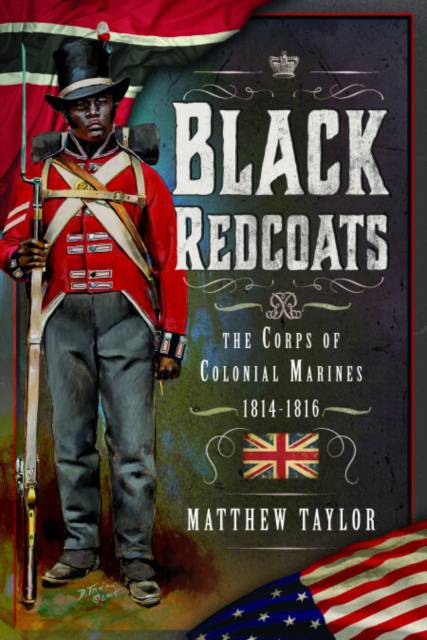
Black enslaved Americans who fled to the British forged the Corps of Colonial Marines, transforming fear into a decisive, enduring challenge to American power.
During the Anglo-American War of 1812, British forces launched hundreds of amphibious raids on the United States. The richest parts of the United States were slave-states, and thousands of enslaved African Americans fled to British forces in what was to be the largest emancipation of enslaved Americans until the abolition of slavery in the USA. From these refugees from slavery, the British built a force - the Corps of Colonial Marines. Black redcoats, they were a fusion of two great American fears, the return of the British King and an uprising by their own oppressed slaves. The Corps of Colonial Marines turned Britain's campaign on America's coasts from one of harassment to one of existential threat to the new nation. Although small in number, the Colonial Marines - fighting to liberate their own families as much as for Great Britain - exerted a massive psychological impact on the United States which paralysed American resistance with fear of a widespread slave uprising, and allowed British forces in the Chesapeake to burn down Washington DC.
As well as examining this little-remembered part of British military and African-American history, this book will also look to the post-war history of the Colonial Marines, their continued survival as a unique ethnic group in the Caribbean today, and their involvement in the largest act of armed African-American resistance to slavery. The "Battle of Negro Fort" in 1816 was the only time American forces left American territory to destroy a fugitive slave community - a community led by former Colonial Marines who, when faced with American attack, raised the British flag.
This book brings black history to the fore of the War of 1812, and gives a voice to those enslaved people who - amidst great power competition between a slave-holding Republic and a slave-holding Empire - demonstrated exceptional bravery and initiative to gain precious freedom for themselves and their descendants.
During the Anglo-American War of 1812, British forces launched hundreds of amphibious raids on the United States. The richest parts of the United States were slave-states, and thousands of enslaved African Americans fled to British forces in what was to be the largest emancipation of enslaved Americans until the abolition of slavery in the USA. From these refugees from slavery, the British built a force - the Corps of Colonial Marines. Black redcoats, they were a fusion of two great American fears, the return of the British King and an uprising by their own oppressed slaves. The Corps of Colonial Marines turned Britain's campaign on America's coasts from one of harassment to one of existential threat to the new nation. Although small in number, the Colonial Marines - fighting to liberate their own families as much as for Great Britain - exerted a massive psychological impact on the United States which paralysed American resistance with fear of a widespread slave uprising, and allowed British forces in the Chesapeake to burn down Washington DC.
As well as examining this little-remembered part of British military and African-American history, this book will also look to the post-war history of the Colonial Marines, their continued survival as a unique ethnic group in the Caribbean today, and their involvement in the largest act of armed African-American resistance to slavery. The "Battle of Negro Fort" in 1816 was the only time American forces left American territory to destroy a fugitive slave community - a community led by former Colonial Marines who, when faced with American attack, raised the British flag.
This book brings black history to the fore of the War of 1812, and gives a voice to those enslaved people who - amidst great power competition between a slave-holding Republic and a slave-holding Empire - demonstrated exceptional bravery and initiative to gain precious freedom for themselves and their descendants.
Spécifications
Parties prenantes
- Auteur(s) :
- Editeur:
Contenu
- Nombre de pages :
- 248
- Langue:
- Anglais
Caractéristiques
- EAN:
- 9781399034029
- Date de parution :
- 30-06-26
- Format:
- Livre broché
- Format numérique:
- Trade paperback (VS)
- Dimensions :
- 159 mm x 235 mm
- Poids :
- 335 g


Seulement chez Librairie Club
+ 47 points sur votre carte client de Librairie Club
Cadeau


Les avis
Nous publions uniquement les avis qui respectent les conditions requises. Consultez nos conditions pour les avis.