


- Retrait en 2 heures
- Assortiment impressionnant
- Paiement sécurisé
- Toujours un magasin près de chez vous
- Retrait gratuit dans votre magasin Club
- 7.000.0000 titres dans notre catalogue
- Payer en toute sécurité
- Toujours un magasin près de chez vous
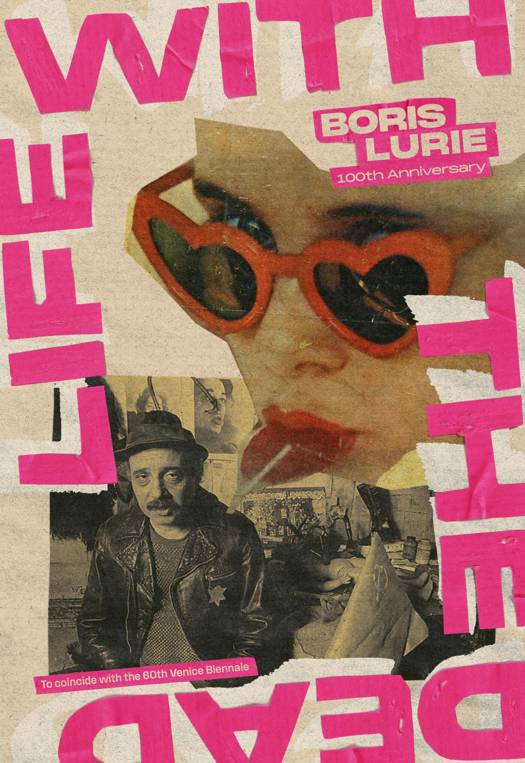
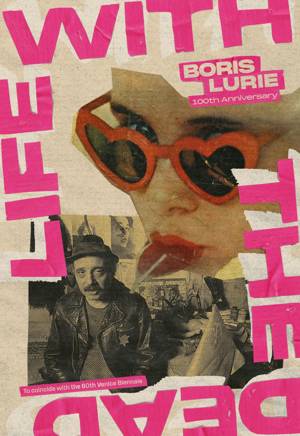
BORIS LURIE: 100th Anniversary (Multilingual edition)
Life with the Dead
Achille Bonito Oliva, Gertrude Stein, Jürgen Wilhelm,, Jürgen Joseph Kaumkötter
Livre relié | Anglais
43,45 €
+ 86 points
Description
On the occasion of the 100th anniversary of Boris Lurie's birthday the catalogue Life with the Dead presents more than fifty works from 1950 to 1970 that illustrate his active commitment to social justice and the memory of the Holocaust. The Jewish artist bore witness in many ways to the horrors of the Holocaust in the German concentration camps. However, his works of art are not only expressions of suffering, but also symbols of hope for the integration of someone who would henceforth belong to the minority of survivors. Friends and companions describe Lurie's development from his beginnings in the 1950s, through the NO! art movement, to his renaissance as one of the main representatives of Holocaust art. Tom Wolfe published his text on an exhibition at Gertrude Stein's gallery, New York in 1964. René Block exhibited Lurie in Berlin, and Achille Bonito Oliva met Boris Lurie's art in 1962 on the occasion of the exhibition Doom Show Boris Lurie and Sam Goodman at the Galeria Arturo Schwarz in Milan. Rafael Vostell and Jürgen Kaumkötter provide the contextual framework for the book, which is complemented by words of greeting from Gertrude Stein, Boris Lurie's lifelong friend and Jürgen Wilhelm from the Landschaftsverband Rheinland.Born in Leningrad in 1924 and raised in Riga, BORIS LURIE (1924-
2008) lost his emotional home forever in December 1942 with
the murder of female family members and his childhood sweetheart.
After surviving several German labor and concentration
camps, Lurie emigrated to New York in 1946, where he became a
co-founder of NO! art, a provocative art movement of the 1960s.
Characterized by subversion, irony, and often through direct references
to the Holocaust, Lurie's works were critical comments on
Pop Art and the American consumer culture of his time.
2008) lost his emotional home forever in December 1942 with
the murder of female family members and his childhood sweetheart.
After surviving several German labor and concentration
camps, Lurie emigrated to New York in 1946, where he became a
co-founder of NO! art, a provocative art movement of the 1960s.
Characterized by subversion, irony, and often through direct references
to the Holocaust, Lurie's works were critical comments on
Pop Art and the American consumer culture of his time.
Spécifications
Parties prenantes
- Auteur(s) :
- Editeur:
Contenu
- Nombre de pages :
- 196
- Langue:
- Anglais
Caractéristiques
- EAN:
- 9783775756877
- Date de parution :
- 25-04-24
- Format:
- Livre relié
- Dimensions :
- 165 mm x 240 mm
- Poids :
- 840 g


Seulement chez Librairie Club
+ 86 points sur votre carte client de Librairie Club
Cadeau

Cadeau


Les avis
Nous publions uniquement les avis qui respectent les conditions requises. Consultez nos conditions pour les avis.