


- Retrait en 2 heures
- Assortiment impressionnant
- Paiement sécurisé
- Toujours un magasin près de chez vous
- Retrait en 2 heures
- Assortiment impressionnant
- Paiement sécurisé
- Toujours un magasin près de chez vous



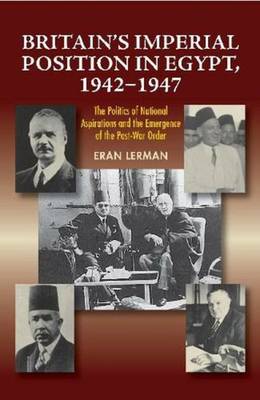
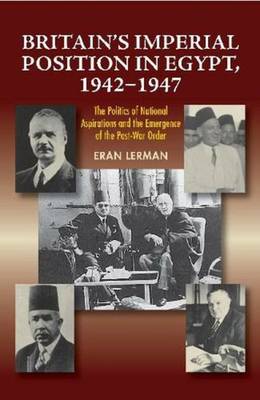
Britain's Imperial Position in Egypt, 1942-1947
The Politics of National Aspirations and the Emergence of the Post-War Order
Lerman
Livre relié | Anglais
132,95 €
+ 265 points
Description
In 1942, the British Empire won a great military victory - Al-'Alamayn, "the end of the beginning" - on Egyptian soil. Yet five years later, in an ugly, forgotten debate at the Security Council, the United States led Britain and Egypt to an inconclusive draw.
How did this Imperial weakening come about? The roots lie in the interaction of British policy, Egyptian politics, and the post-war international order. Imperial control had rested upon the practice of intervention - using the rivalry between the Palace and the majority political party, the Wafd. In 1942, and again in 1943 and 1944, British Ambassador Miles Lampson forced Faruq, the King of Egypt, to put, and keep, Prime Minister Mustaffa Nahhas in power. But this came at the cost of "national aspirations" - al-Gala' (evacuation of all British forces) and sovereignty over Sudan - being raised as the rallying cries of a frustrated political opposition. Meanwhile, American (and Soviet) influence grew; and Egypt's new diplomatic instrument, the Arab League, became part of the political game.
Nahhas was dismissed in September 1944. His successor, Ahmad Mahir, who had been on the Embassy's payroll, was assassinated in 1945. Lampson thus lost control of the game. In London, Foreign Secretary Ernest Bevin recognized the need for a new ambassador and a conciliatory negotiator (Lord Stansgate), offering full evacuation to Prime Minister Ismail Sidqi. And yet this compromise also broke down as a result of the unresolved Sudan question. Intervention was weighed in London, but rejected. The Egyptians insisted on the 1947 UN debate, which merely produced a prolonged stalemate indicating Britain's Imperial decline. This set the stage for the Suez debacle of the 1950s, calling an end to Britain's authority at multiple levels.
Spécifications
Parties prenantes
- Auteur(s) :
- Editeur:
Contenu
- Nombre de pages :
- 340
- Langue:
- Anglais
Caractéristiques
- EAN:
- 9781789761351
- Date de parution :
- 01-10-21
- Format:
- Livre relié
- Format numérique:
- Genaaid
- Dimensions :
- 160 mm x 237 mm
- Poids :
- 684 g


Seulement chez Librairie Club
+ 265 points sur votre carte client de Librairie Club
Cadeau


Les avis
Nous publions uniquement les avis qui respectent les conditions requises. Consultez nos conditions pour les avis.