


En raison d'une grève chez bpost, des retards de livraison peuvent survenir. Besoin de quelque chose en urgence ? Optez pour un retrait en magasin ou rendez-vous dans une Librairie Club à proximité.
- Retrait en 2 heures
- Assortiment impressionnant
- Paiement sécurisé
- Toujours un magasin près de chez vous
En raison d'une grève chez bpost, des retards de livraison peuvent survenir. Besoin de quelque chose en urgence ? Optez pour un retrait en magasin ou rendez-vous dans une Librairie Club à proximité.
- Retrait en 2 heures
- Assortiment impressionnant
- Paiement sécurisé
- Toujours un magasin près de chez vous



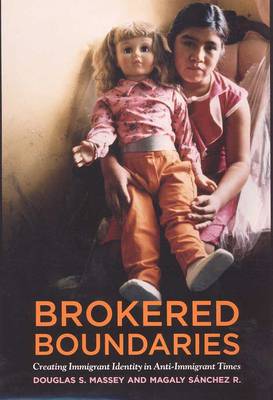
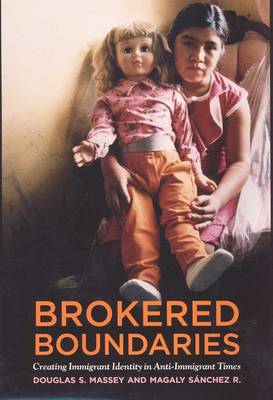
Brokered Boundaries
Immigrant Identity in Anti-Immigrant Times
Douglas S Massey, Magaly Sanchez R
Livre broché | Anglais
53,45 €
+ 106 points
Description
Anti-immigrant sentiment reached a fever pitch after 9/11, but its origins go back much further. Public rhetoric aimed at exposing a so-called invasion of Latino immigrants has been gaining ground for more than three decades--and fueling increasingly restrictive federal immigration policy. Accompanied by a flagging U.S. economy--record-level joblessness, bankruptcy, and income inequality--as well as waning consumer confidence, these conditions signaled one of the most hostile environments for immigrants in recent memory. In Brokered Boundaries, Douglas Massey and Magaly Sánchez untangle the complex political, social, and economic conditions underlying the rise of xenophobia in U.S. society. The book draws on in-depth interviews with Latin American immigrants in metropolitan New York and Philadelphia and--in their own words and images--reveals what life is like for immigrants attempting to integrate in anti-immigrant times. What do the social categories "Latino" and "American" actually mean to today's immigrants? Brokered Boundaries analyzes how first- and second-generation immigrants from Central and South America and the Caribbean navigate these categories and their associated meanings as they make their way through U.S. society. Massey and Sánchez argue that the mythos of immigration, in which newcomers gradually shed their respective languages, beliefs, and cultural practices in favor of a distinctly American way of life, is, in reality, a process of negotiation between new arrivals and native-born citizens. Natives control interactions with outsiders by creating institutional, social, psychological, and spatial mechanisms that delimit immigrants' access to material resources and even social status. Immigrants construct identities based on how they perceive and respond to these social boundaries. The authors make clear that today's Latino immigrants are brokering boundaries in the context of unprecedented economic uncertainty, repressive anti-immigrant legislation, and a heightening fear that upward mobility for immigrants translates into downward mobility for the native-born. Despite an absolute decline in Latino immigration, immigration-related statutes have tripled in recent years, including many that further shred the safety net for legal permanent residents as well as the undocumented. Brokered Boundaries shows that, although Latin American immigrants come from many different countries, their common reception in a hostile social environment produces an emergent Latino identity soon after arrival. During anti-immigrant times, however, the longer immigrants stay in America, the more likely they are to experience discrimination and the less likely they are to identify as Americans.
Spécifications
Parties prenantes
- Auteur(s) :
- Editeur:
Contenu
- Nombre de pages :
- 315
- Langue:
- Anglais
Caractéristiques
- EAN:
- 9780871545800
- Date de parution :
- 29-03-12
- Format:
- Livre broché
- Format numérique:
- Trade paperback (VS)
- Dimensions :
- 155 mm x 228 mm
- Poids :
- 471 g


Seulement chez Librairie Club
+ 106 points sur votre carte client de Librairie Club
Cadeau


Les avis
Nous publions uniquement les avis qui respectent les conditions requises. Consultez nos conditions pour les avis.