


- Retrait en 2 heures
- Assortiment impressionnant
- Paiement sécurisé
- Toujours un magasin près de chez vous
- Retrait en 2 heures
- Assortiment impressionnant
- Paiement sécurisé
- Toujours un magasin près de chez vous



22,45 €
+ 44 points
Description
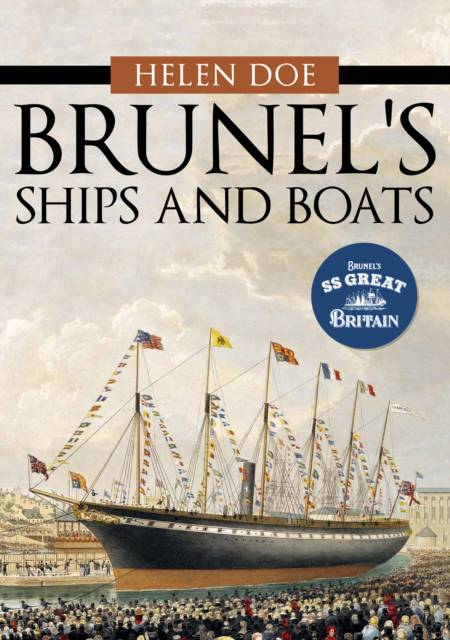
From a young age Isambard Brunel played with boats. He wrote to his father from school that he had quite worn out his hands by making models. At the age of 11 he witnessed his father's experiments with steam shipping on the River Thames. In his 20s he wrote in his secret diary of his daydreams of leading a fleet of ships against Algiers. This was the exciting age of maritime steam and Brunel was the great innovator. His first ship was the Great Western, a wooden paddle steamer launched in 1837, followed by his famous ships the Great Britain and the Great Eastern. But these are not the only vessels in which he was closely engaged. Just before the final launching of the Great Britain he worked with the Admiralty on HMS Rattler to trial the first naval propeller-driven ship. In Bristol in 1844 he designed one of his smallest steam vessels, a drag boat, specifically to assist in clearing the silt from the floating harbor. A version of this little boat was built for use at Bridgwater and is now in the care of the ss Great Britain Trust. Brunel's testy relationship with the naval architect, John Scott Russell, is well known but before the Great Eastern they worked together on two other steam ships, Adelaide and Victoria, for the Australian Royal Mail Steam Ship Company. This is the first book to provide an overview of all of Brunel's vessels, small and large. Readers will see his progression as he pushed boundaries and tested new technology. New information will be added on the lesser-known ships, with new perspectives on the well-known ships. Primary sources include the extensive Brunel archive at the ss Great Britain and sources held elsewhere such as the National Archives at Kew and Parliamentary Papers. It includes the latest research but is written in an interesting and accessible style that suits a wide audience.
Spécifications
Parties prenantes
- Auteur(s) :
- Editeur:
Contenu
- Nombre de pages :
- 96
- Langue:
- Anglais
Caractéristiques
- EAN:
- 9781445683645
- Date de parution :
- 15-09-18
- Format:
- Livre broché
- Format numérique:
- Trade paperback (VS)
- Dimensions :
- 165 mm x 235 mm
- Poids :
- 294 g


Seulement chez Librairie Club
+ 44 points sur votre carte client de Librairie Club
Cadeau


Les avis
Nous publions uniquement les avis qui respectent les conditions requises. Consultez nos conditions pour les avis.