


- Retrait en 2 heures
- Assortiment impressionnant
- Paiement sécurisé
- Toujours un magasin près de chez vous
- Retrait en 2 heures
- Assortiment impressionnant
- Paiement sécurisé
- Toujours un magasin près de chez vous



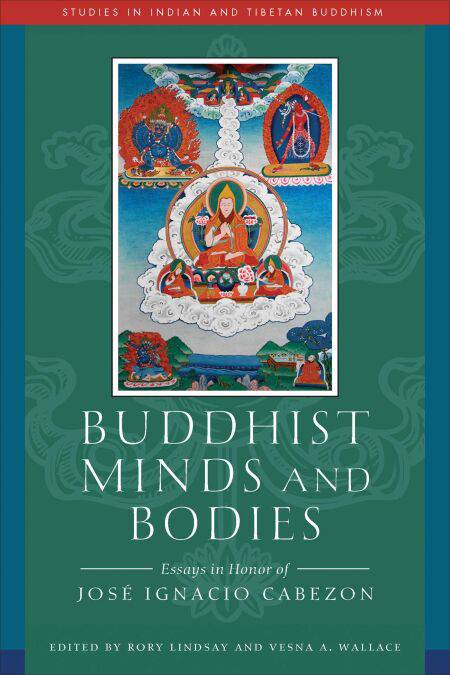
Buddhist Minds and Bodies EBOOK
61,50 €
+ 61 points
Description
Students and admirers of Jose Ignacio Cabezon pay tribute with this collection of thirty diverse essays on the study of religion. Centered on Buddhism and Tibet, contributors also uncover insights about missionaries, Muslims, and Mongolia.
As the Fourteenth Dalai Lama Chair of Buddhist Studies at the University of California at Santa Barbara, a past president of the American Academy of Religion, and a prolific author of watershed books, Jose Cabezon has left an indelible mark on the discipline of religious studies. A refugee from Cuba who was brought to the US as a child, he trained both as a monk in the Tibetan Buddhist system and as a scholar at the University of Wisconsin. From his earliest publications, he has demonstrated the breadth of his interests and expertise, from philosophy, exegesis, and translation, to history, sexuality, and comparative religion, spanning centuries and sects, and interrogating hidden assumptions within the field.
The present volume honors that broad legacy in similarly diverse fashion. Thirty fellow scholars, both peers and former students, explore a rich array of topics inspired by Cabezon’s seminal contributions and scholarly collegiality. Whether it is the intersection of queer theory with Madhyamaka philosophy, Jesuit engagement with Tibetan scholasticism, shifting mores around selling religious objects in Tibet, the religious identity of Tibetan women who travel beyond death, or the fate of Tibetan Muslims in exile, the articles collected here will intrigue even as they expand our knowledge of the diverse ways that Tibetan religion and Buddhist practice has manifested, both historically and in the present day.
Introduction: The Life and Career of Jose Ignacio Cabezon
Rory Lindsay and Vesna Wallace
PART 1. BUDDHIST PHILOSOPHY
Candrakirti on What Is Unreal Even for Conventional Truth: The Significance of a Prevalent Misreading of Madhyamakavatara 6.26
Dan Arnold
The Bodhisattva’s Aspiration and Vow
Douglas Duckworth
How the First Jebtsundampa Zanabazar’s Profound Sadhana “Became” a Geluk Text
Baatra Erdene-Ochir
Pus and Cinnabar Makes Ambrosia: Khedrup’s Epistemological Alchemy
Jed Forman
Sailing Neurath’s Ship Across the Ocean of Samsara: Why Geluk Epistemology Provides the Most Reliable Compass
Jay L. Garfield
Buddhadicy: Is There a Buddhist Version of the Problem of Evil?
John Powers
“God Existing in Himself”: Catholic Missionaries in Tibet and Their Revalorization of the Three Jewels
Michael J. Sweet
Is Prasangika a Global Eliminativist? Tsongkhapa and Taktsang Lotsawa on the Role of Madhyamaka Analysis and Its Implications
Sonam Thakchoe
Queering the Conventional
Sara McClintock
Ippolito Desideri on Tibetan Scholasticism
Trent Pomplun
Mahamudra, Extrinsic Emptiness, and the Otherness of Consciousness
Georges Dreyfus
Who/What Was Sherab Zangmo? Religious Identity in Contemporary Eastern Tibet
Alyson Prude
PART 2. BUDDHIST TANTRA
A Yab Without a Yum? Tsongkhapa’s Vajrabhairava Controversy
Bryan J. Cuevas
Great-Seal Text, or Not? Saraha’s Vajra-Secret Song
Roger R. Jackson
Everything Arises on Its Own: Inclusivism and the Spontaneous Union of Mahamudra in Kuddalapada’s Acintyadvayakramopadesa
Adam C. Krug
Buddhist Mind-Body Problems: Dolpopa and Rendawa on Tantric Polemics of Emptiness and Bodiless Transference in the Kalacakra Tantra
Michael R. Sheehy
Locating Sambhala in the Kalacakra Tantra
John Newman
Emptiness and the Epistemology of Perception in Kalacakra Literature
Vesna Wallace
PART 3. CRITICAL TEXTUAL STUDIES
“Intertextual Promiscuity” and Appropriation Writ Large: Authorship and Citational Practice in Tibetan Texts
Rae Erin Dachille
Sera Jetsun’s Text-Critical Note Anent a Passage in the 1449 Xylograph of Gyaltsab’s Pramanavarttika Commentary
Leonard W. J. van der Kuijp
Iterated Rebirth Lineages of Thuken Losang Chokyi Nyima
Nancy G. Lin
The Unjust King? The Great Fifth Dalai Lama’s Advice to Tusiyetu Qan Gombodorji
Matthew W. King
Orazio della Penna, the Lam rim chen mo, and the Serampore Dictionary
Leonard Zwilling
Practical Instructions on the Nine Vehicles
Nathaniel Rich
PART 4. TIBETAN BUDDHISM AND MATERIAL CULTURE
From Molten Lead to Momos: The Shifting Moral Dimensions of Selling Buddhist Objects in Tibet
Alex Catanese
Digital Projects in Tibetan Buddhist Studies
William Dewey
Reimagining the Mani Pill: Ritual Innovation and the Invention of Tradition in Tibetan Buddhist Material Religion
James Gentry
PART 5. TIBETAN ISLAM
Shifting Sacred Centers and the Reconstruction of Tibetan Muslim Religious Identity
Rohit Singh
The Tibetan Quran
Rory Lindsay
POSTLUDE
Our Histories, Our Selves: A Few Reflections on José Cabezón’s 2020 AAR Presidential Address
Francis Clooney, S.J
As the Fourteenth Dalai Lama Chair of Buddhist Studies at the University of California at Santa Barbara, a past president of the American Academy of Religion, and a prolific author of watershed books, Jose Cabezon has left an indelible mark on the discipline of religious studies. A refugee from Cuba who was brought to the US as a child, he trained both as a monk in the Tibetan Buddhist system and as a scholar at the University of Wisconsin. From his earliest publications, he has demonstrated the breadth of his interests and expertise, from philosophy, exegesis, and translation, to history, sexuality, and comparative religion, spanning centuries and sects, and interrogating hidden assumptions within the field.
The present volume honors that broad legacy in similarly diverse fashion. Thirty fellow scholars, both peers and former students, explore a rich array of topics inspired by Cabezon’s seminal contributions and scholarly collegiality. Whether it is the intersection of queer theory with Madhyamaka philosophy, Jesuit engagement with Tibetan scholasticism, shifting mores around selling religious objects in Tibet, the religious identity of Tibetan women who travel beyond death, or the fate of Tibetan Muslims in exile, the articles collected here will intrigue even as they expand our knowledge of the diverse ways that Tibetan religion and Buddhist practice has manifested, both historically and in the present day.
Introduction: The Life and Career of Jose Ignacio Cabezon
Rory Lindsay and Vesna Wallace
PART 1. BUDDHIST PHILOSOPHY
Candrakirti on What Is Unreal Even for Conventional Truth: The Significance of a Prevalent Misreading of Madhyamakavatara 6.26
Dan Arnold
The Bodhisattva’s Aspiration and Vow
Douglas Duckworth
How the First Jebtsundampa Zanabazar’s Profound Sadhana “Became” a Geluk Text
Baatra Erdene-Ochir
Pus and Cinnabar Makes Ambrosia: Khedrup’s Epistemological Alchemy
Jed Forman
Sailing Neurath’s Ship Across the Ocean of Samsara: Why Geluk Epistemology Provides the Most Reliable Compass
Jay L. Garfield
Buddhadicy: Is There a Buddhist Version of the Problem of Evil?
John Powers
“God Existing in Himself”: Catholic Missionaries in Tibet and Their Revalorization of the Three Jewels
Michael J. Sweet
Is Prasangika a Global Eliminativist? Tsongkhapa and Taktsang Lotsawa on the Role of Madhyamaka Analysis and Its Implications
Sonam Thakchoe
Queering the Conventional
Sara McClintock
Ippolito Desideri on Tibetan Scholasticism
Trent Pomplun
Mahamudra, Extrinsic Emptiness, and the Otherness of Consciousness
Georges Dreyfus
Who/What Was Sherab Zangmo? Religious Identity in Contemporary Eastern Tibet
Alyson Prude
PART 2. BUDDHIST TANTRA
A Yab Without a Yum? Tsongkhapa’s Vajrabhairava Controversy
Bryan J. Cuevas
Great-Seal Text, or Not? Saraha’s Vajra-Secret Song
Roger R. Jackson
Everything Arises on Its Own: Inclusivism and the Spontaneous Union of Mahamudra in Kuddalapada’s Acintyadvayakramopadesa
Adam C. Krug
Buddhist Mind-Body Problems: Dolpopa and Rendawa on Tantric Polemics of Emptiness and Bodiless Transference in the Kalacakra Tantra
Michael R. Sheehy
Locating Sambhala in the Kalacakra Tantra
John Newman
Emptiness and the Epistemology of Perception in Kalacakra Literature
Vesna Wallace
PART 3. CRITICAL TEXTUAL STUDIES
“Intertextual Promiscuity” and Appropriation Writ Large: Authorship and Citational Practice in Tibetan Texts
Rae Erin Dachille
Sera Jetsun’s Text-Critical Note Anent a Passage in the 1449 Xylograph of Gyaltsab’s Pramanavarttika Commentary
Leonard W. J. van der Kuijp
Iterated Rebirth Lineages of Thuken Losang Chokyi Nyima
Nancy G. Lin
The Unjust King? The Great Fifth Dalai Lama’s Advice to Tusiyetu Qan Gombodorji
Matthew W. King
Orazio della Penna, the Lam rim chen mo, and the Serampore Dictionary
Leonard Zwilling
Practical Instructions on the Nine Vehicles
Nathaniel Rich
PART 4. TIBETAN BUDDHISM AND MATERIAL CULTURE
From Molten Lead to Momos: The Shifting Moral Dimensions of Selling Buddhist Objects in Tibet
Alex Catanese
Digital Projects in Tibetan Buddhist Studies
William Dewey
Reimagining the Mani Pill: Ritual Innovation and the Invention of Tradition in Tibetan Buddhist Material Religion
James Gentry
PART 5. TIBETAN ISLAM
Shifting Sacred Centers and the Reconstruction of Tibetan Muslim Religious Identity
Rohit Singh
The Tibetan Quran
Rory Lindsay
POSTLUDE
Our Histories, Our Selves: A Few Reflections on José Cabezón’s 2020 AAR Presidential Address
Francis Clooney, S.J
Spécifications
Parties prenantes
- Editeur:
Contenu
- Nombre de pages :
- 640
- Langue:
- Anglais
- Collection :
Caractéristiques
- EAN:
- 9798890700360
- Date de parution :
- 12-10-26
- Format:
- Ebook
- Protection digitale:
- Adobe DRM
- Format numérique:
- ePub

Seulement chez Librairie Club
+ 61 points sur votre carte client de Librairie Club
Cadeau


Les avis
Nous publions uniquement les avis qui respectent les conditions requises. Consultez nos conditions pour les avis.