


En raison d'une grève chez bpost, des retards de livraison peuvent survenir. Besoin de quelque chose en urgence ? Optez pour un retrait en magasin ou rendez-vous dans une Librairie Club à proximité.
- Retrait en 2 heures
- Assortiment impressionnant
- Paiement sécurisé
- Toujours un magasin près de chez vous
En raison d'une grève chez bpost, des retards de livraison peuvent survenir. Besoin de quelque chose en urgence ? Optez pour un retrait en magasin ou rendez-vous dans une Librairie Club à proximité.
- Retrait en 2 heures
- Assortiment impressionnant
- Paiement sécurisé
- Toujours un magasin près de chez vous



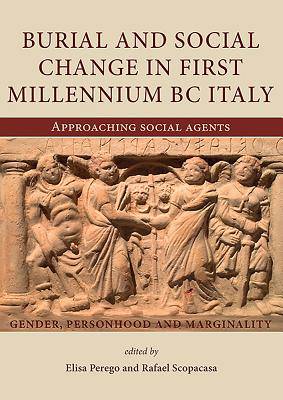
Burial and Social Change in First Millennium BC Italy
Approaching Social Agents
104,45 €
Description
In the first millennium BC, communities in Italy underwent crucial transformations which scholars have often subsumed under the heading of 'state formation', namely increased social stratification, the centralisation of political power and, in some cases, urbanisation. Most research has tended to approach the phenomenon of state formation and social change in relation to specific territorial dynamics of growth and expansion, changing modes of exploitation of food and other resources over time, and the adoption of selected socio-ritual practices by the ruling élites in order to construct and negotiate authority. In contrast, comparatively little attention has been paid to the question of how these key developments resonated across the broader social transect, and how social groups other than ruling élites both promoted these changes and experienced their effects. The chief aim of this collection of 14 papers is to harness innovative approaches to the exceptionally rich mortuary evidence of first millennium BC Italy, in order to investigate the roles and identities of social actors who either struggled for power and social recognition, or were manipulated and exploited by superior authorities in a phase of tumultuous socio-political change throughout the entire Mediterranean basin. Contributors provide a diverse range of approaches in order to examijne how power operated in society, how it was exercised and resisted, and how this can be studied through mortuary evidence.
Section 1 addresses the construction of identity by focusing mainly on the manipulation of age, ethnic and gender categories in society in regions and sites that reached notable power and splendour in first millennium BC Italy. These include Etruria, Latium, Campania and the rich settlement of Verucchio, in Emilia Romagna.
Section 2 offers a counterpoint to Section 1 by focusing on the concepts of 'periphery', marginality and the frailty of élite (or sub-élite) power in phases of dramatic socio-political change. Moreover, this Section approaches the idea of identity construction in 'fringe' geographical areas that are sometimes overlooked in Anglophone scholarship, such as the Veneto, Samnium, western Emilia and Trentino-South Tyrol. With its overall emphasis on scholarly multivocality, this volume is one of the first ever to strongly advocate for a study of social exclusion and extreme social marginality in late prehistoric and proto-historic Italy.
Section 1 addresses the construction of identity by focusing mainly on the manipulation of age, ethnic and gender categories in society in regions and sites that reached notable power and splendour in first millennium BC Italy. These include Etruria, Latium, Campania and the rich settlement of Verucchio, in Emilia Romagna.
Section 2 offers a counterpoint to Section 1 by focusing on the concepts of 'periphery', marginality and the frailty of élite (or sub-élite) power in phases of dramatic socio-political change. Moreover, this Section approaches the idea of identity construction in 'fringe' geographical areas that are sometimes overlooked in Anglophone scholarship, such as the Veneto, Samnium, western Emilia and Trentino-South Tyrol. With its overall emphasis on scholarly multivocality, this volume is one of the first ever to strongly advocate for a study of social exclusion and extreme social marginality in late prehistoric and proto-historic Italy.
Spécifications
Parties prenantes
- Editeur:
Contenu
- Nombre de pages :
- 336
- Langue:
- Anglais
- Collection :
- Tome:
- n° 11
Caractéristiques
- EAN:
- 9781785701849
- Date de parution :
- 27-12-16
- Format:
- Livre broché
- Format numérique:
- Trade paperback (VS)
- Dimensions :
- 170 mm x 239 mm
- Poids :
- 916 g

Seulement chez Librairie Club
Cadeau


Les avis
Nous publions uniquement les avis qui respectent les conditions requises. Consultez nos conditions pour les avis.