


- Retrait en 2 heures
- Assortiment impressionnant
- Paiement sécurisé
- Toujours un magasin près de chez vous
- Retrait gratuit dans votre magasin Club
- 7.000.0000 titres dans notre catalogue
- Payer en toute sécurité
- Toujours un magasin près de chez vous


1,99 €
+ 1 points
Description
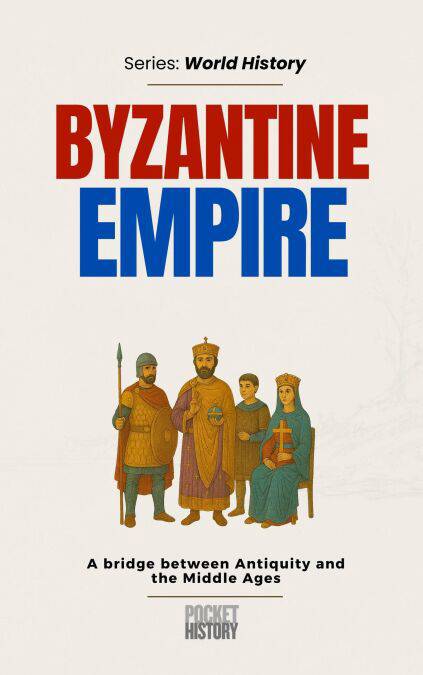
The Byzantine Empire was not merely the survival of Rome in the East—it was a civilization that reshaped the medieval world. From the founding of Constantinople in 330 CE to its dramatic fall in 1453, Byzantium stood at the crossroads of Europe and Asia, preserving classical knowledge while forging a distinct Christian and Greek identity.
This book explores the political genius of emperors like Justinian I and Basil II, the creation of the Corpus Juris Civilis, and the breathtaking architectural triumph of Hagia Sophia. It examines the theological controversies that defined Orthodox Christianity, including Iconoclasm and the Great Schism, as well as the empire's complex relationship with the Crusades and its ultimate confrontation with the rising Ottoman power.
Beyond battles and intrigue, this narrative reveals a sophisticated society of diplomats, scholars, artists, and merchants whose innovations—from Greek fire to intricate mosaics—shaped the Mediterranean world. Byzantium was a bridge between antiquity and the Renaissance, safeguarding Roman law, Christian theology, and classical philosophy during centuries of upheaval.
Clear, engaging, and historically grounded, this book offers a compelling portrait of an empire that endured for more than a thousand years and left an indelible mark on global history.
Spécifications
Parties prenantes
- Auteur(s) :
- Editeur:
Contenu
- Langue:
- Anglais
- Collection :
Caractéristiques
- EAN:
- 9798233862823
- Date de parution :
- 25-02-26
- Format:
- Ebook
- Protection digitale:
- /
- Format numérique:
- ePub



Seulement chez Librairie Club
+ 1 points sur votre carte client de Librairie Club
Cadeau

Cadeau


Les avis
Nous publions uniquement les avis qui respectent les conditions requises. Consultez nos conditions pour les avis.